
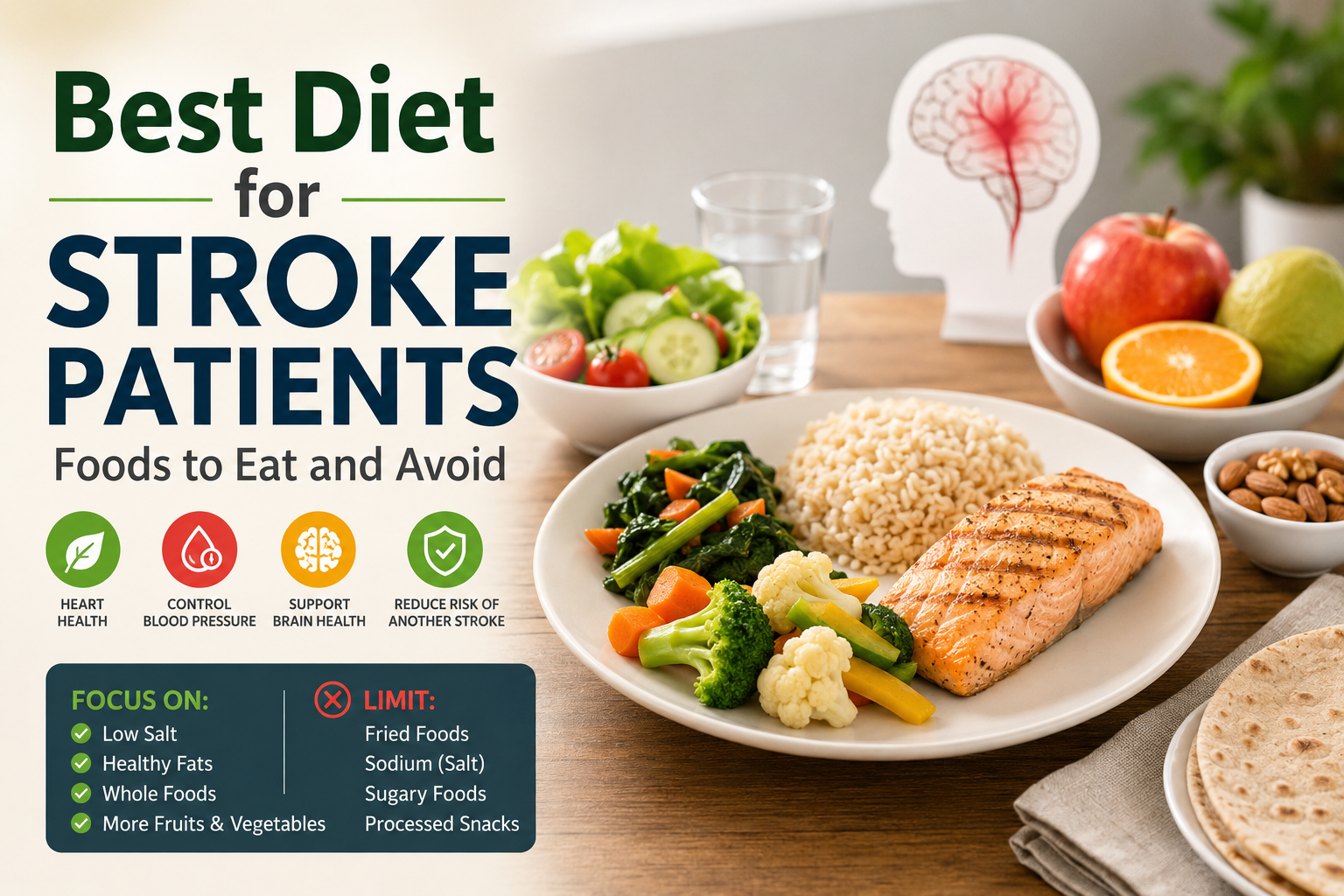
Watching a loved one recover from a stroke is not easy. Food becomes one of the biggest daily decisions — this guide breaks down what to eat, what to avoid, and how to build safe, doctor-friendly meals at home.
Nursing Services
In-home care, Lahore
Physiotherapy
Recovery support at home
Diabetic Patient Care
Related guide
Bedridden Patient Care
Complete family guide
One day everything feels normal, and the next, your family is learning new routines, new medicines, and new ways to care for someone you love. These are real worries for families managing patient care at home in Lahore.
The good news is that a stroke patient's diet does not need to be complicated. With the right daily choices, meals can support brain healing, protect the heart, and lower the risk of a second stroke. This guide breaks down the best diet for stroke patients in simple, practical terms.
A stroke happens when blood flow to the brain is blocked or reduced. Because of this, diet plays a direct role in the two biggest stroke risk factors: high blood pressure and high cholesterol.
- Keep blood pressure steady
- Lower bad cholesterol
- Support healthy blood sugar levels
- Reduce swelling and inflammation
- Give the body energy for recovery and therapy
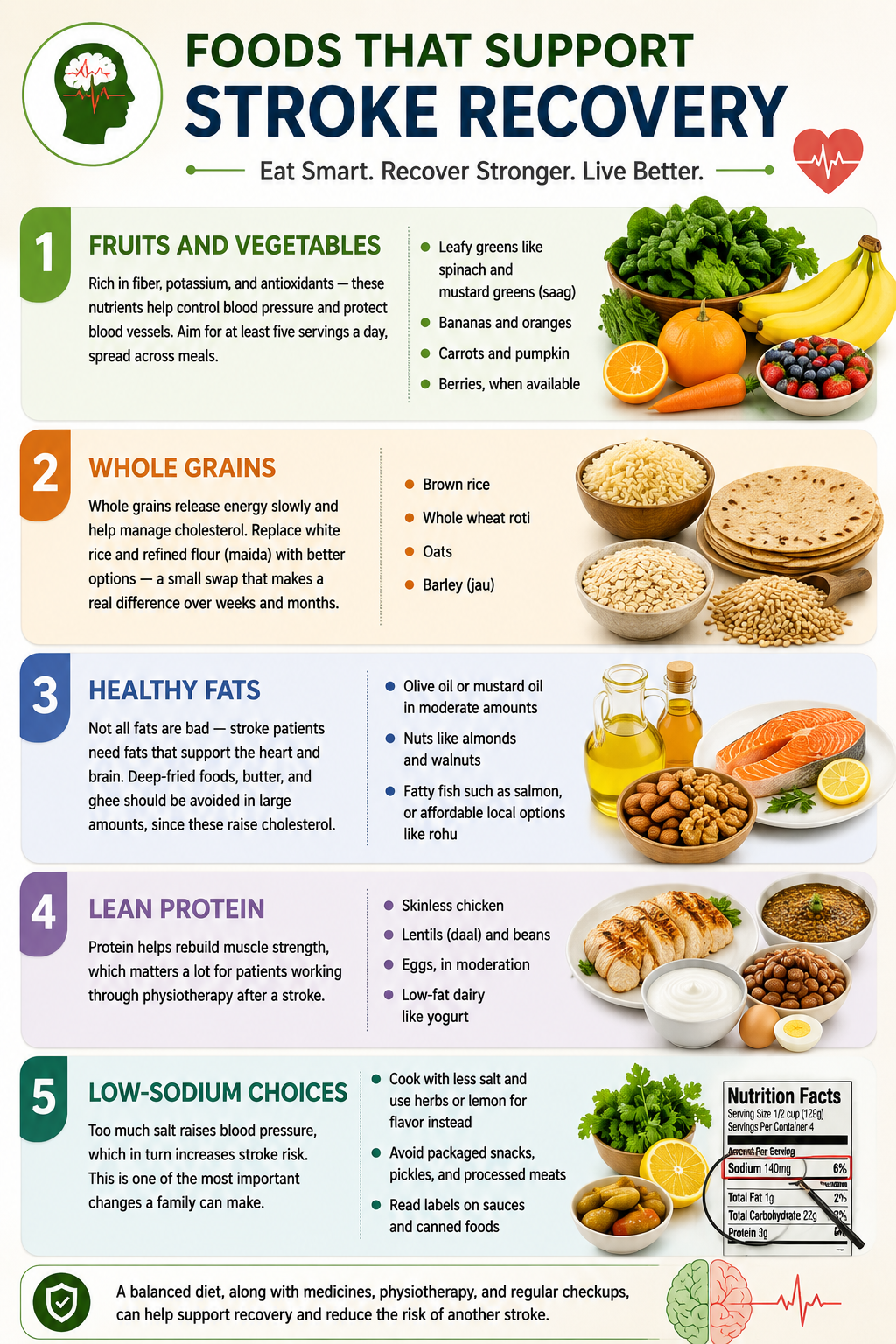
Rich in fiber, potassium, and antioxidants — these nutrients help control blood pressure and protect blood vessels. Aim for at least five servings a day, spread across meals.
- Leafy greens like spinach and mustard greens (saag)
- Bananas and oranges
- Carrots and pumpkin
- Berries, when available
Whole grains release energy slowly and help manage cholesterol. Replace white rice and refined flour (maida) with better options — a small swap that makes a real difference over weeks and months.
- Brown rice
- Whole wheat roti
- Oats
- Barley (jau)
Not all fats are bad — stroke patients need fats that support the heart and brain. Deep-fried foods, butter, and ghee should be avoided in large amounts, since these raise cholesterol.
- Olive oil or mustard oil in moderate amounts
- Nuts like almonds and walnuts
- Fatty fish such as salmon, or affordable local options like rohu
Protein helps rebuild muscle strength, which matters a lot for patients working through physiotherapy after a stroke.
- Skinless chicken
- Lentils (daal) and beans
- Eggs, in moderation
- Low-fat dairy like yogurt
Too much salt raises blood pressure, which in turn increases stroke risk. This is one of the most important changes a family can make.
- Cook with less salt and use herbs or lemon for flavor instead
- Avoid packaged snacks, pickles, and processed meats
- Read labels on sauces and canned foods
Some foods work against stroke recovery and should be kept to a minimum. That said, cutting these out completely is not always realistic — reducing them gradually, meal by meal, works better for most families.
- Fried and oily foods
- Sugary drinks and sweets
- Processed and packaged snacks
- Excess red meat
- High-sodium foods like namkeen, pickles, and canned soups
- Alcohol
Some stroke patients develop difficulty swallowing, known as dysphagia. Because of this, meal texture matters just as much as meal content, since it raises the risk of choking.
- Soft, mashed, or pureed foods
- Thickened liquids if recommended by a doctor
- Smaller bites and slower eating pace
- Sitting fully upright while eating
Portion sizes, of course, should match the patient's activity level and any specific instructions from their doctor or dietitian.
- Assuming "home-cooked" always means healthy, even when it is heavy in oil and salt
- Skipping meals because the patient has low appetite
- Not tracking fluid intake, which matters for blood pressure and kidney health
- Making sudden, drastic diet changes instead of gradual ones
- Sudden difficulty swallowing or frequent coughing while eating
- Unexplained weight loss
- Signs of dehydration
- New confusion, weakness, or slurred speech, which could signal another stroke
Can a stroke patient eat rice and roti?
Yes, in moderation. Whole wheat roti and brown rice, specifically, are better choices than refined white options.
Is fruit juice a good substitute for whole fruit?
Whole fruit is generally better because it contains fiber, which juice lacks. Additionally, juice can spike blood sugar quickly.
How much water should a stroke patient drink?
This, ultimately, depends on the patient's kidney function and doctor's advice. Therefore, always confirm fluid limits with a physician.
Can diet alone prevent a second stroke?
No. Diet supports recovery and lowers risk, but it works alongside medication, physiotherapy, and regular checkups.
A good diet will not undo a stroke, but it can, nonetheless, meaningfully support recovery and reduce the risk of it happening again. Overall, simple changes, made consistently, matter more than perfection.
Families managing recovery at home, however, do not have to do this alone. Professional home nursing services, elderly care, and patient care services in Lahore can help build and follow a safe, doctor-approved diet and recovery plan, so both the patient and the family feel supported every step of the way.
ICU Trained Nurse
Critical care at home
Medical Equipment
Rent for home care
Palliative Care
Family comfort guide
About Shumaya
Who we are
Our trained caregivers and nurses help families in Lahore build safe, doctor-approved diet and recovery plans — so both patient and family feel supported every step of the way.
Book a Free Consultation