

Stroke recovery gets easier when there's a steady rhythm to the day. This guide walks through what a practical daily routine can look like at home — from morning hygiene to safe sleep — plus the small habits that add up to real progress.
Bedridden Patient Care
A complete family guide
Diabetic Patient Care
Daily management at home
Palliative Care at Home
Comfort, support & quality of life
Use this as a quick reference, then keep reading for the details behind each part of the day.
| Time | Daily Task |
|---|---|
| Morning | Hygiene, dressing, medication |
| Breakfast | Healthy meal and hydration |
| Midday | Therapy and movement |
| Afternoon | Rest and light activity |
| Evening | Medication, dinner, relaxation |
| Night | Safe sleeping position |
Stroke recovery is not just about physical healing. In addition, it's about rebuilding confidence, strength, and independence, one day at a time.
A consistent routine gives the brain and body something predictable to work with. As a result, it also becomes easier for family caregivers to notice small changes early, and because of this, early attention to new symptoms can prevent bigger problems later.
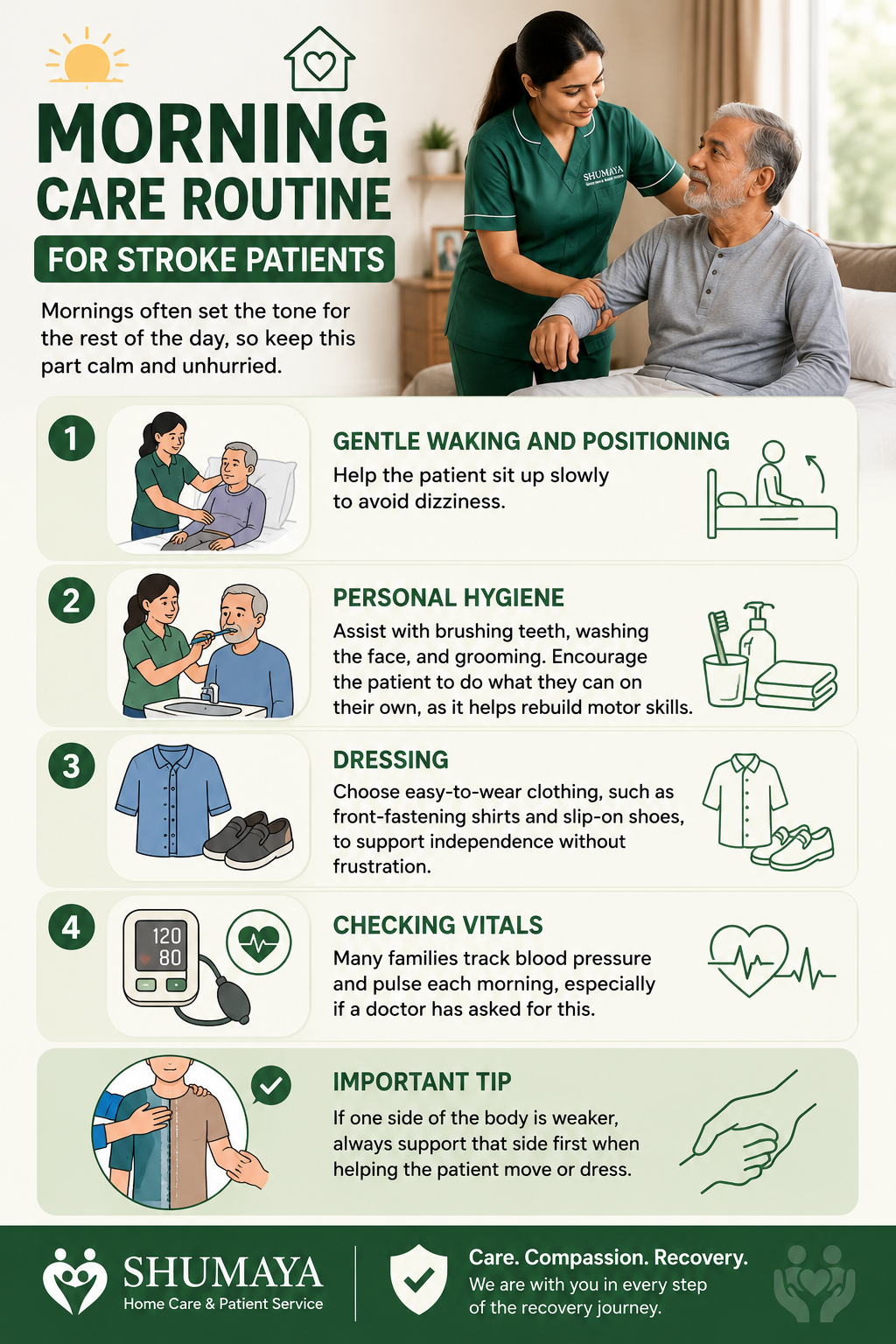
Mornings often set the tone for the rest of the day, so keep this part calm and unhurried.
- Gentle waking and positioning: Help the patient sit up slowly to avoid dizziness.
- Personal hygiene: Assist with brushing teeth, washing the face, and grooming. At the same time, encourage the patient to do what they can on their own, since it helps rebuild motor skills.
- Dressing: Choose easy-to-wear clothing, such as front-fastening shirts and slip-on shoes, to support independence without frustration.
- Checking vitals: Many families track blood pressure and pulse each morning, especially if a doctor has asked for this.
Eating well supports recovery and, in turn, helps prevent complications like weight loss or dehydration.
- Offer small, frequent meals instead of large ones if the patient tires easily.
- Watch for swallowing difficulty, since this is a common stroke effect. For example, soft foods, thickened liquids, and slow, seated eating can lower the risk of choking.
- Include fruits, vegetables, whole grains, and lean protein to support heart and brain health.
- Keep a water bottle nearby, because stroke patients sometimes forget to drink enough during the day.
Missed or mistimed medication is, unfortunately, one of the more common problems in stroke recovery at home.
- Use a labeled pill organizer for each day of the week.
- Set phone alarms or reminders for medication times.
- Keep a simple written log, so any caregiver in the house knows what has already been given.
- Never adjust a dose without the doctor's approval, even if the patient seems to be feeling better.
Overall, good medication management is one of the areas where home nursing services in Lahore can take real pressure off a family, especially when several medications are involved.
Movement, done safely, is one of the biggest drivers of stroke recovery.
- First, follow the exact exercises given by the physiotherapist. Don't skip or add movements without guidance.
- Next, practice sitting, standing, and short walks as advised, using a walker or cane if recommended.
- Also, encourage light stretching for the affected arm or leg to prevent stiffness.
- Finally, take breaks between exercises, since progress in stroke recovery is usually slow and steady rather than fast.
Families who feel unsure about handling exercises safely often, therefore, bring in support through home nurse services, particularly for patients who are still weak or unsteady on their feet.
- Remove loose rugs and clear walking paths.
- Add grab bars in the bathroom and a non-slip mat in the shower.
- Keep frequently used items within easy reach, so the patient doesn't need to stretch or bend awkwardly.
- Make sure lighting is bright, especially on stairs and in hallways.
- If the patient uses a wheelchair or walker, check that doorways and furniture spacing allow easy movement.
Regular sleep is part of a good daily routine, not separate from it. Therefore, try to keep a consistent bedtime and wake time, even on slower recovery days.
A calm, dimly lit room, a comfortable and safe sleeping position, and a short wind-down period without screens can, together, help the patient settle more easily. However, if sleep is unusually disturbed or the patient seems excessively drowsy during the day, mention it to the doctor at the next visit.
Stroke recovery affects mood as much as it affects the body. In fact, it's common for patients to feel frustrated, sad, or withdrawn.
- Talk to the patient like an adult, not a child, even if their speech is affected.
- Celebrate small wins, such as a few extra steps, a clearer word, or a better appetite.
- Encourage light social contact with family and friends instead of isolation.
- Watch for signs of ongoing low mood or hopelessness, and if it doesn't improve, mention this to the doctor.
Some symptoms need medical attention right away, even during recovery. Call a doctor or emergency service immediately if you notice:
- Sudden new weakness or numbness, especially on one side
- Slurred speech or confusion that appears suddenly
- Severe headache with no clear cause
- Trouble breathing or chest pain
- A fall that leads to a head injury
These signs can point to another stroke or a new medical problem. Therefore, it's better to check early than to wait and see.
Not every issue needs an emergency visit, but it's still worth a call to the doctor if you notice:
- A wound, bed sore, or skin area that looks red or isn't healing
- Ongoing constipation or trouble urinating
- Increasing tiredness or loss of appetite over several days
- Mood changes that last more than a week or two
Many families manage stroke care well on their own, especially with support from friends and extended family. However, for patients with more complex needs, such as swallowing difficulty, limited mobility, wound care, or multiple medications, patient care services in Lahore can add a layer of safety and consistency that's hard to maintain alone, day after day.
Trained home nursing support can, for instance, help with:
- Daily hygiene and mobility assistance
- Medication schedules
- Monitoring for warning signs
- Coordination with physiotherapy routines
- Giving family caregivers a break to avoid burnout
Post this somewhere visible, such as on the fridge or by the patient's bed, so any family member can check progress at a glance.
How long does a daily stroke care routine need to continue?
It depends on the severity of the stroke and how recovery is going. For instance, some patients need close daily support for a few months, while others need it longer-term. A doctor or physiotherapist can guide timing based on progress.
Can a stroke patient be left alone at home?
This depends on their mobility, swallowing ability, and how steady they are on their feet. In early recovery especially, it's safer to have someone present, even if only for part of the day.
What is the most common mistake families make in stroke home care?
Skipping or rushing physiotherapy exercises, along with not sticking to a consistent medication schedule, are two of the most common issues that slow recovery.
In short, a steady, simple daily care routine for stroke patients, covering hygiene, meals, medication, movement, and safety, gives recovery the best possible chance. For families in Lahore who want extra hands and trained support along the way, reliable home healthcare in Lahore options can make daily care routines easier to manage without sacrificing the quality of care your loved one deserves.
Nursing Services in Lahore
Trained home nursing support
Physiotherapy Services
Guided recovery exercises at home
Medical Equipment on Rent
Wheelchairs, beds & mobility aids
Need a helping hand with daily care?
Book a free consultation and let our trained nurses build a routine around your loved one.
Get a Free Consultation