
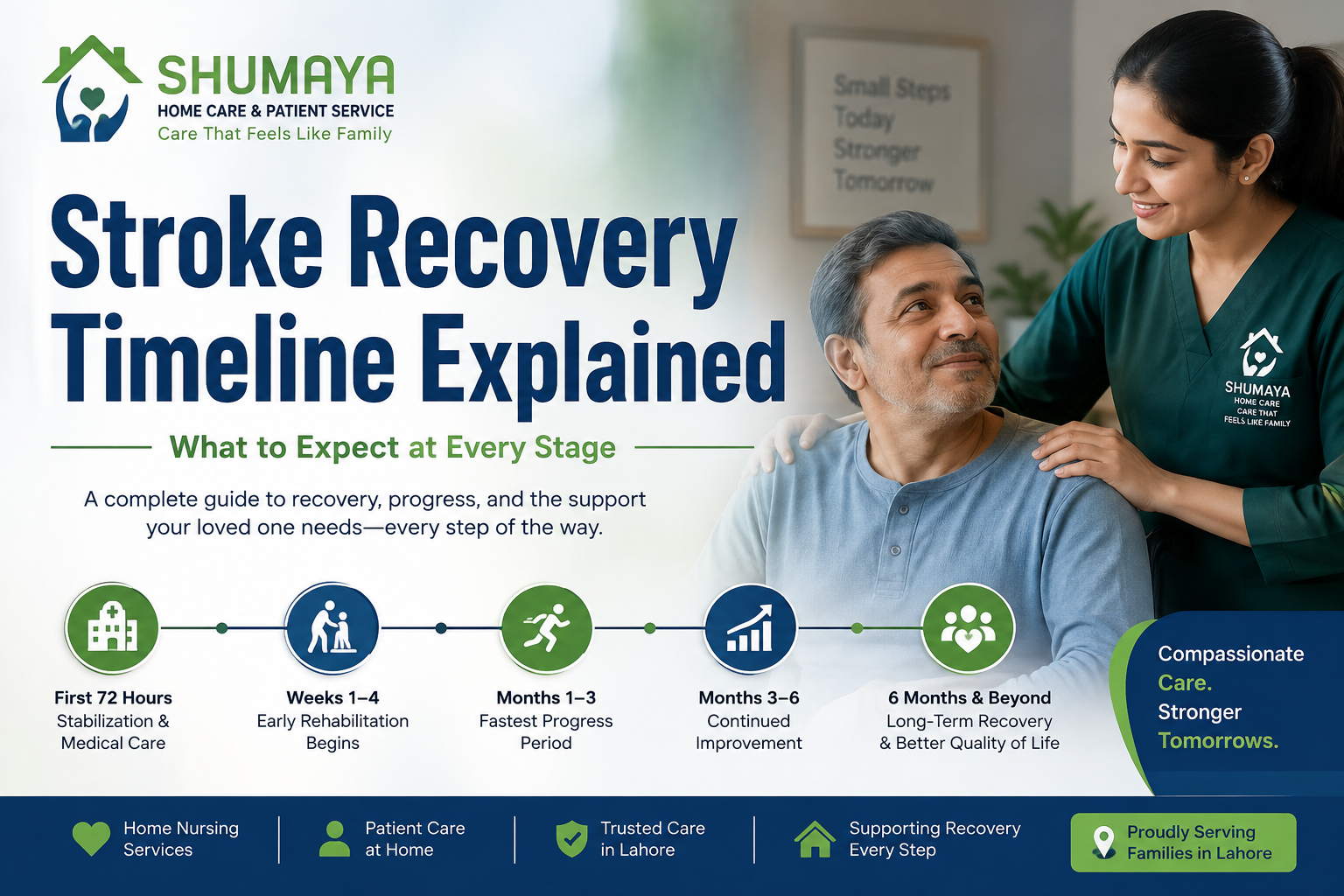
Stroke Recovery Timeline Explained
When someone in your family has a stroke, the first question most people ask is simple: "How long until they get better?" There isn't one answer that fits every patient, but understanding the general stroke recovery timeline can help you plan, stay patient, and know what to expect at each stage.
Bedridden Patient Care Guide
Preventing complications during recovery
Palliative Care at Home
A complete family guide to comfort
Quick Summary
- Hospital care begins immediately after a stroke
- Therapy often starts within the first few days
- The biggest gains usually happen in the first three months
- Recovery can continue for months or even years
- Consistent family support makes a real difference
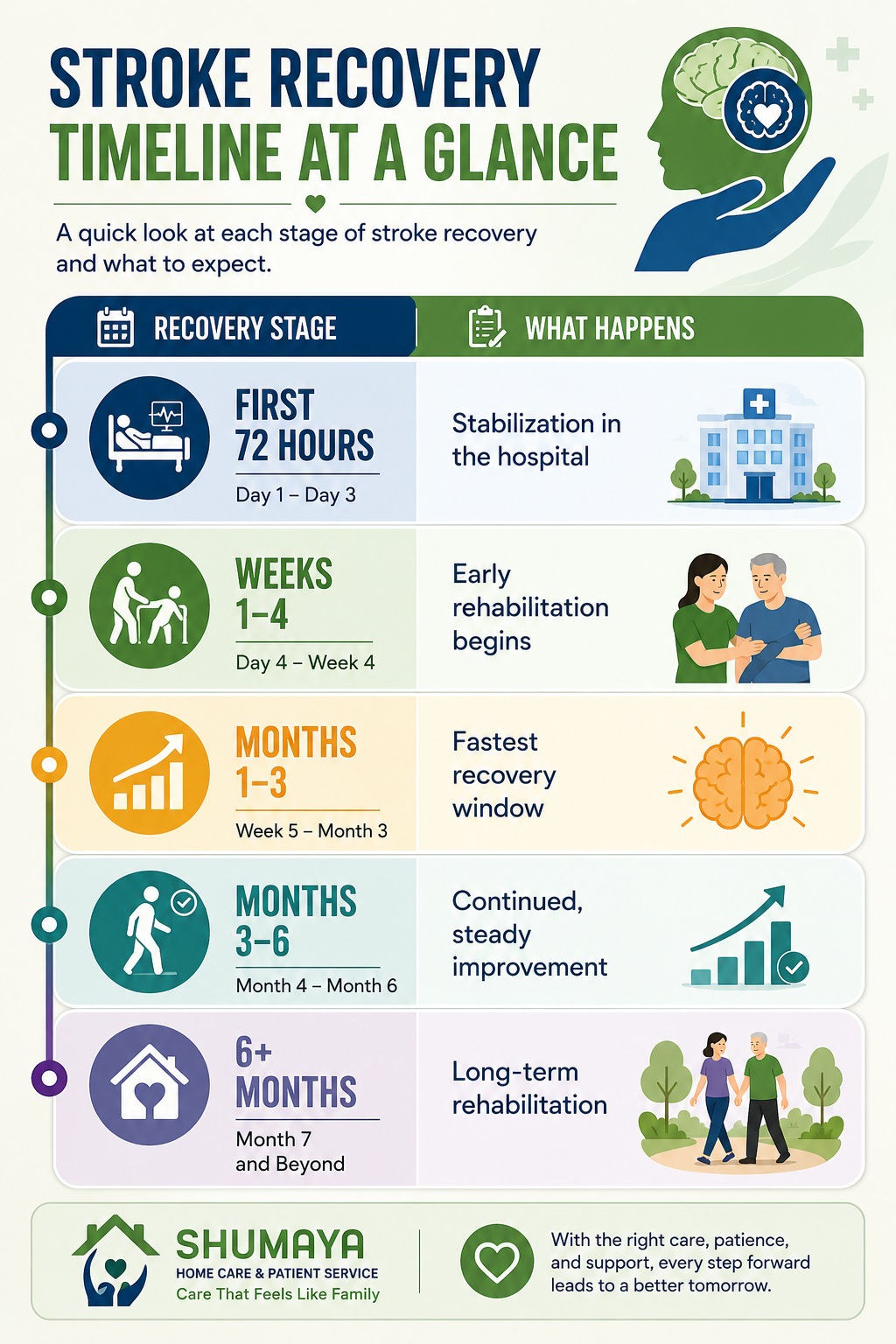
Stroke Recovery Timeline at a Glance
| Recovery Stage | What Happens |
|---|---|
| First 72 hours | Stabilization in the hospital |
| Weeks 1–4 | Early rehabilitation begins |
| Months 1–3 | Fastest recovery window |
| Months 3–6 | Continued, steady improvement |
| 6+ months | Long-term rehabilitation |
Why Every Stroke Recovery Timeline Looks Different
Before we get into the stages, it helps to know why recovery speed varies so much from patient to patient. Recovery depends on:
- The type and size of the stroke
- Which part of the brain was affected
- How quickly treatment was given
- The patient's age and overall health
- How consistent they are with therapy afterward
Two patients with a similar stroke can heal at very different speeds. That's normal, and it's not a sign that something is going wrong.
The Five Stages of Stroke Recovery
The First 24 to 72 Hours (Hospital Stabilization)
The first few days after a stroke are about keeping the patient stable and preventing further damage. During this time, doctors will monitor blood pressure, oxygen levels, and brain activity closely.
During this stage, families usually notice:
- Difficulty speaking or understanding speech
- Weakness on one side of the body
- Trouble swallowing
- Confusion or memory gaps
This is a medical stage, not a rehabilitation stage. Instead, the care team focuses on preventing a second stroke and identifying the areas of the brain that were affected.
The First Few Weeks (Early Rehabilitation)
Once the patient is stable, rehabilitation usually begins — sometimes even while they're still in the hospital. This is where physiotherapy, speech therapy, and occupational therapy start playing a bigger role in helping the patient regain movement and confidence.
Common goals during this stage include:
- Regaining basic movement, like sitting up or standing
- Practicing simple speech and swallowing exercises
- Relearning daily tasks such as feeding or dressing
- Building strength for short walks with support
Many families choose to bring their loved one home during this stage and continue therapy through home nursing services in Lahore, since consistent daily practice matters more than the location of the exercises.
One to Three Months (The Fastest Progress Window)
Most stroke survivors see their biggest improvements within the first three months. This is largely because the brain is highly adaptable during this period, a process doctors call neuroplasticity — the brain forming new pathways to make up for damaged ones.
During this window, families often notice:
- Better balance and coordination
- Clearer speech
- More independence with everyday tasks
- Improved mood as confidence returns
This is also the stage where patient care services in Lahore become especially helpful, since daily supervision, medication management, and consistent therapy routines make a real difference in how much progress a patient makes.
Three to Six Months (Continued Improvement)
Progress usually slows down after three months, but it doesn't stop. In fact, many patients continue to improve steadily, especially with regular therapy and a supportive home environment.
At this stage, families should watch for:
- Plateaus in progress (which are normal and temporary)
- Signs of frustration or low mood
- Fatigue after therapy sessions
- Small wins that add up over time, like walking without help
Sticking to a routine matters more than pushing too hard. Overexertion can slow healing, while steady, guided effort keeps recovery moving forward safely.
Six Months and Beyond (Long-Term Recovery)
Recovery after six months tends to be slower and more gradual, but it's far from over. In fact, some stroke survivors continue improving for a year or longer, especially with ongoing therapy and support.
Long-term recovery often focuses on:
- Fine motor skills, like using hands for small tasks
- Advanced speech and language practice
- Preventing another stroke through lifestyle changes
- Emotional adjustment to any lasting limitations
Bedridden or limited-mobility patients at this stage may benefit from bedridden patient care and ongoing nursing support to prevent complications like bed sores or infections while continuing therapy at home.
Common Mistakes Families Make During Recovery
Expecting a fixed timeline
Recovery isn't a straight line, and comparing one patient to another can cause unnecessary worry.
Skipping therapy sessions
Consistency matters more than intensity.
Ignoring emotional health
Depression and anxiety are common after a stroke and deserve just as much attention as physical recovery.
Doing too much too soon
Pushing a patient past their limits can lead to setbacks or injury.
When to Call a Doctor
Reach out to a doctor right away if you notice:
- Sudden new weakness or numbness
- Severe headache that comes on suddenly
- Trouble breathing or chest pain
- Signs of another stroke, such as slurred speech or facial drooping
Stroke recovery guidance in this article is meant for general understanding only and should never replace advice from your patient's doctor or care team.
How Home Nursing Support Helps During Recovery
A structured routine, consistent therapy, and a calm home environment can make a real difference in how well and how quickly a stroke patient recovers. For example, professional home nursing care can help with mobility exercises, medication schedules, nutrition, and daily monitoring — all without the added stress of frequent hospital visits.
For families in Lahore managing stroke recovery at home, having trained support close by often makes the difference between a slow, uncertain recovery and one that stays on track.
The Takeaway
Every stroke recovery timeline looks a little different, and that's okay. What matters most isn't how fast progress happens, but how consistent the care and rehabilitation are along the way. With the right support, patience, and a steady daily routine, many stroke survivors regain more independence than families expect, even months or years after the stroke.
Frequently Asked Questions
How long does full stroke recovery usually take?
Some patients recover in a few months, while others continue improving for a year or more. Overall, it depends heavily on the stroke's severity and how consistent therapy is.
Is it normal for progress to slow down after a few months?
Yes. The fastest gains usually happen in the first three months, and progress naturally becomes slower after that, though it can still continue.
Can a stroke patient fully recover?
Many patients regain most or all of their function, especially with early treatment and steady rehabilitation. However, others may have lasting effects, but can still improve their quality of life significantly.
Does home care speed up stroke recovery?
Home care doesn't replace medical therapy, but consistent daily support, supervision, and routine can help patients stay on track with their recovery goals.
Explore More Care Guides
Need Support With Stroke Recovery at Home?
Shumaya Home Care's trained nurses and attendants help families across Lahore manage recovery with confidence — book a free consultation today.
Book a Free Consultation