
Early Signs of Stroke Everyone Should Know

Patient Care Guide Early Signs of Stroke Everyone Should Know A stroke can happen in seconds, but the warning signs often show up before the worst of it. Many families later say the same thing: “We noticed something was off, but we weren’t sure what to do.” That short gap between noticing and acting is exactly where lives are saved or lost. If you’re caring for an elderly parent, a bedridden patient, or anyone recovering from surgery at home, knowing the early signs of stroke isn’t optional — it’s part of everyday patient care. This guide walks you through what to watch for, what to do in the moment, and how home nursing support can help patients recover safely afterward. F.A.S.T. Test Home Nursing Elderly Care Lahore Related Guides More From Our Patient Care Library If stroke recovery is on your mind, these guides can help too. 🩺 Nursing Services in Lahore Trained nurses for home-based patient care ❤️ ICU Trained Nurse at Home Critical care nursing for high-risk recovery 🛏️ Bedridden Patient Care Guide A complete family care guide 💉 Diabetic Patient Care at Home Managing a key stroke risk factor At A Glance What Are the Early Signs of a Stroke? The most common early signs of stroke include: 🙂Face drooping 💪Arm weakness 🗣️Slurred speech ✋Sudden numbness 👁️Vision changes 🧭Loss of balance 🤕Severe headache If any of these symptoms appear suddenly, seek emergency medical care immediately. The Basics What Is a Stroke? A stroke happens when blood flow to part of the brain is suddenly cut off or reduced. Without blood, brain cells start to die within minutes. That’s why doctors often say “time is brain” — the faster a stroke is treated, the better the chances of recovery. There are two main types: one caused by a blocked blood vessel, and one caused by a burst blood vessel. Both need emergency medical attention right away. In Detail Early Warning Signs of Stroke The signs of stroke usually appear suddenly. Here are the ones families should never ignore: ✋ Sudden weakness or numbness on one side of the face, arm, or leg 🗣️ Slurred or confused speech, or trouble understanding what others are saying 🙂 Drooping on one side of the face, especially noticeable when the person smiles 👁️ Sudden vision problems in one or both eyes 🧭 Loss of balance or coordination, sudden dizziness, or trouble walking 🤕 A severe headache with no known cause, sometimes described as the “worst headache of their life” These signs can appear alone or together. Even if they go away quickly, they still need medical attention — a brief episode can be a warning sign of a bigger stroke coming later. Quick Check The F.A.S.T. Test Doctors use a simple method called F.A.S.T. to help families recognize a stroke quickly: 1FaceAsk the person to smile. Does one side droop? 2ArmsAsk them to raise both arms. Does one arm drift down? 3SpeechAsk them to repeat a simple sentence. Is the speech slurred or strange? 4TimeIf you notice any of these signs, call emergency services immediately. Keeping this checklist in mind, especially for elderly care or patients with heart conditions and diabetes, can make a real difference in how fast help arrives. Higher Risk Who Is at Higher Risk? Some patients need extra attention because they’re more likely to have a stroke: Older adults, especially those over 65 Patients with high blood pressure or heart disease Diabetic patients People who’ve had a stroke before Patients who smoke or have poor circulation If you’re already managing daily care for someone in one of these groups, it helps to build stroke awareness into your regular routine — not just as a one-time lesson. Don’t Ignore It Can Stroke Symptoms Come and Go? Mini-Stroke / TIA Many people ignore symptoms because they disappear after a few minutes. This can be a Transient Ischemic Attack (TIA), often called a mini-stroke. A TIA is a warning sign that a major stroke could happen soon. Even if the person feels normal again, they should be evaluated by a doctor immediately. Don’t wait to see if the symptoms come back. In The Moment What to Do If You Notice the Signs 1 Stay calm and note the time symptoms started — doctors will ask. 2 Call for emergency medical help right away. Don’t wait to see if symptoms pass. 3 Keep the person still and comfortable. Don’t give them food, water, or medicine. 4 Loosen tight clothing and monitor their breathing. 5 If they lose consciousness, check breathing and be ready to assist until help arrives. Never try to drive the person to the hospital yourself if an ambulance is available — emergency responders can start treatment on the way. Recovery After a Stroke: Why Home Care Matters Recovery after a stroke doesn’t end at the hospital. Many patients need help relearning basic movements, managing medication, and adjusting to daily life again. This is where trained home nursing support becomes valuable — helping with mobility, medication management, and physiotherapy exercises without the patient having to stay in the hospital longer than needed. Families in Lahore managing post-stroke recovery at home often find it easier with a professional patient care team involved, especially in the first few weeks when the risk of falls or complications is highest. Common Questions Frequently Asked Questions Is a stroke the same as a heart attack? No. A heart attack affects the heart, while a stroke affects the brain. They have different symptoms but share some of the same risk factors, like high blood pressure and diabetes. How fast should someone get treatment? As fast as possible. Every minute without treatment increases the risk of lasting brain damage. Can stroke be prevented? Many strokes are linked to controllable factors like blood pressure, diabetes, and smoking. Regular checkups and consistent patient care at home can lower the risk significantly. Final Thoughts Stay Alert, Stay Prepared Recognizing the early signs of stroke can be the difference between
Mental Health Home Nursing Services in Lahore
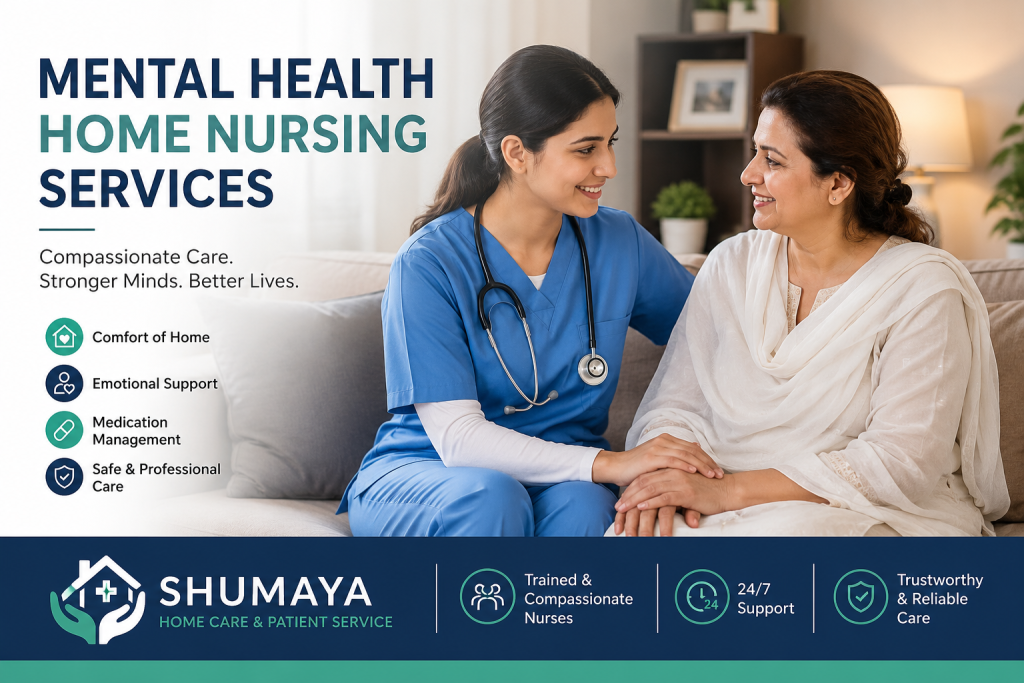
PATIENT CARE GUIDE Mental Health Home Nursing Services in Lahore When a loved one is struggling with their mental health, you don’t have to choose between managing everything alone and sending them somewhere unfamiliar. Trained support can come to them, at home, in Lahore. Mental Health Care Home Nursing Lahore 🏥 Nursing Services in Lahore Trained home nursing care 🩺 Medical Attendant Services Daily support at home ❤ ICU Trained Nurse at Home Critical care nursing Watching someone you love struggle with their mental health is hard. Maybe your father has stopped talking to anyone since your mother passed away. Maybe your sister is dealing with severe anxiety and can’t leave the house anymore. Maybe your husband is recovering from a mental health crisis and the hospital just isn’t the right fit anymore. You want to help, but you’re not trained for this. You have a job, kids, or your own health to manage. That’s where mental health home nursing services come in. At Shumaya Home Care & Patient Service, we bring trained mental health support directly to your home in Lahore, so your loved one gets proper care without leaving the place they feel safest. What Is Mental Health Home Nursing? A trained nurse or caregiver visits your home to support a family member dealing with a mental health condition, including: Depression & mood changes Anxiety disorders Bipolar disorder Schizophrenia & psychosis Dementia-related behavior Post-psychiatric discharge recovery Stress-related breakdowns Unlike general home nursing, this type of care focuses on emotional stability, medication routines, safety monitoring, and daily support that keeps the patient calm and secure at home. Why Families Choose Home Care Over a Facility A lot of families in Lahore still think a mental health condition means the patient has to go to a clinic or facility. That’s not always true, and honestly, it’s not always the best option either. Familiar surroundings reduce stress Being in a strange facility can make anxiety, confusion, or agitation worse. Home is familiar, and that alone can calm a patient down. Family stays involved Recovery is faster when a patient still sees their family every day, instead of being isolated in an institution. One-on-one attention A home nurse focuses on one patient, not a full ward. That means real attention, not rushed check-ins. Privacy matters Mental health still carries a lot of stigma in our society. Many families prefer to keep care private and quiet. What a Mental Health Home Nurse Actually Does People often assume a nurse just “watches” the patient. It’s a lot more hands-on than that. A typical day might include: Medication management — making sure the patient takes the right medicine, at the right time, in the right dose. Missed or doubled doses are one of the most common causes of relapse. Mood and behavior monitoring — noticing early warning signs, withdrawal, agitation, sudden silence, sleep changes, before they turn into a crisis. Daily routine support — helping the patient eat, bathe, sleep, and move through the day with structure. Calm crisis handling — if the patient becomes distressed or agitated, a trained nurse knows how to de-escalate the situation without making it worse. Family guidance — teaching family members how to talk to and support the patient, so the whole household isn’t guessing. Common Mistakes Families Make 1 Waiting too long to get help. Families often try to manage everything alone until they’re exhausted, and by then the patient’s condition has usually gotten worse too. 2 Talking about the patient instead of to them. Even when someone is unwell, they can usually sense when they’re being discussed like they’re not in the room. 3 Stopping medicine once the patient “seems fine.” This is one of the fastest ways to trigger a relapse. 4 Ignoring caregiver exhaustion. A tired, overwhelmed caregiver ends up putting the patient at risk too — caregiver burnout needs attention just as much as the patient’s condition does. Signs Your Loved One May Need Professional Support Not every bad day means you need a nurse. But watch for these signs: Refusing to eat, bathe, or leave their room for days Talking about hopelessness or self-harm Sudden aggression or confusion Missing medication doses repeatedly Family members feeling unsafe or unable to cope Recent discharge from a psychiatric hospital with no support plan If you’re seeing two or more of these, it’s worth talking to a doctor and looking into home nursing support in Lahore. When to Call a Doctor Immediately Some situations need urgent medical attention, not just home care: The person talks about wanting to hurt themselves or others Sudden, severe confusion or loss of touch with reality Complete refusal to eat or drink for more than a day Any physical injury from self-harm If any of this happens, contact a doctor or emergency service right away. A home nurse supports ongoing care — they are not a replacement for emergency medical help. How Shumaya Home Care Supports Families in Lahore Our mental health home nursing team is trained to work with families, not just patients. When you reach out to Shumaya Home Care & Patient Service, here’s what that looks like: A trained nurse or attendant assigned based on your loved one’s specific condition A daily or 24/7 care schedule, depending on what your family needs Regular updates so you’re never left wondering how your loved one is doing Coordination with your family doctor or psychiatrist when needed Support for related needs too, if your loved one has other health conditions alongside their mental health needs We know every household in Lahore is different, so we build a care plan around your patient, not a one-size-fits-all package. Frequently Asked Questions Is a mental health nurse the same as a psychiatrist? No. A psychiatrist diagnoses and prescribes treatment. A home nurse carries out daily care, monitors the patient, and manages medication and routine under that treatment plan. Can a home nurse handle a patient who becomes aggressive? Trained home nurses know de-escalation methods
How to Care for a TB Patient at Home: A Complete Guide for Families

Patient Care Guide How to Care for a TB Patient at Home: A Complete Guide for Families A tuberculosis diagnosis can feel overwhelming, but most patients recover fully at home with the right precautions, medication routine, and family support. Here’s what every caregiver in Lahore needs to know. ✓ Doctor Reviewed Information ✓ Family Care Guide ✓ Easy to Understand Quick Navigation What Is TB? Home Care Steps Preventing Spread Emotional Support Warning Signs Common Mistakes FAQs Related Care Guides Home Nursing Services in Lahore Skilled nursing support for patients recovering at home. Medical Attendant Services Day-to-day patient monitoring and assistance. Diabetic Patient Home Care Managing chronic conditions safely at home. Medication Management for Home Nurses Keeping treatment schedules on track. What Is Tuberculosis (TB)? Tuberculosis is an infectious disease caused by the bacterium Mycobacterium tuberculosis. It usually affects the lungs, though it can also affect other parts of the body such as the kidneys, spine, or brain. TB spreads through the air when a person with active pulmonary TB coughs, sneezes, laughs, or speaks. It does not spread by sharing food, shaking hands, or touching common household items. ℹ️ Good News TB is treatable and curable with the right combination of antibiotics. Most people start feeling better within a few weeks, but the entire treatment course — usually several months — must be completed. Can a TB Patient Be Cared for at Home? Yes. Many TB patients can safely recover at home if their doctor believes hospitalization isn’t necessary. Home care is generally suitable when: The patient is stable They are taking prescribed TB medicines Family members follow infection control measures Follow-up appointments are attended regularly The home has good ventilation ⚠️ Precaution The first few weeks of treatment are especially important, as the patient may still be able to spread the bacteria. Following your doctor’s advice closely during this period protects the whole household. How to Care for a TB Patient at Home Providing good care doesn’t require complicated medical knowledge — small daily habits make recovery smoother and safer. 1. Make Sure Medication Is Taken Correctly The most important part of TB treatment is taking medication exactly as prescribed. Give medicines at the same time every day Use a medication schedule or reminder Never skip doses Complete the full treatment even if the patient feels better Report side effects to the doctor instead of stopping medication 🚨 Why This Matters Stopping treatment too early can allow the bacteria to become drug-resistant, making TB much harder to treat. 2. Encourage Plenty of Rest The body needs energy to fight infection. Patients should get enough sleep every night, take short rest breaks during the day, and avoid heavy physical work until approved by their doctor. As recovery progresses, light activity may be recommended. 3. Provide a Healthy Diet A nutritious diet helps the immune system recover. Include foods such as eggs, chicken, fish, lentils and beans, milk and yogurt, fresh fruits, leafy green vegetables, whole grains, and nuts and seeds. 💡 Caregiver Tip If the patient has a poor appetite, offer smaller meals more frequently instead of three large ones, and encourage enough water unless the healthcare provider has advised otherwise. 4. Monitor Symptoms Every Day Keeping track of the patient’s condition helps identify problems early. Watch for: Watch For Why It Matters Persistent fever May indicate treatment isn’t yet working Increasing cough Sign that symptoms are worsening Difficulty breathing Requires prompt medical attention Weight loss / poor appetite Affects recovery and immune strength Fatigue Normal early on, but should gradually improve Medication side effects Should always be reported to the doctor A simple notebook or mobile app can help record symptoms and medication schedules. 5. Keep Follow-Up Appointments Regular medical visits let doctors confirm the infection is responding to treatment. Never skip follow-up examinations, laboratory tests, chest X-rays if recommended, or medication reviews. Preventing TB from Spreading at Home Protecting other family members is just as important as caring for the patient. Keep the Room Well Ventilated Fresh air helps reduce the concentration of TB bacteria indoors. Open windows whenever possible and allow sunlight into the room — good airflow makes it harder for bacteria to remain suspended in the air. Practice Good Cough Etiquette Cover mouth and nose with a tissue or elbow while coughing or sneezing Dispose of used tissues safely Wash hands afterward Wear Masks When Recommended During the early stages of treatment, healthcare providers may recommend that the patient wears a mask around others, and that caregivers wear masks during close contact if advised. Always follow your doctor’s guidance on mask use. Limit Close Contact During the Infectious Period Until the doctor confirms the patient is no longer infectious: avoid unnecessary visitors, reduce prolonged close contact, keep distance where practical, and ensure good airflow in shared spaces. These precautions are usually temporary. Maintain Good Hand Hygiene Everyone in the household should wash their hands regularly, especially after helping the patient, handling tissues, cleaning the patient’s room, or before preparing food. Emotional Support Matters Too Living with tuberculosis can be emotionally challenging — some patients worry about their health or feel isolated because of temporary precautions. Family support can make a big difference. Listen without judgment Encourage them to complete treatment Include them in family conversations when appropriate Celebrate small improvements Reassure them that TB is treatable 💡 Caregiver Tip Avoid blaming or criticizing the patient. Compassion and patience help build confidence during recovery. Warning Signs That Need Immediate Medical Attention Most patients recover well, but certain symptoms require prompt medical care. 🚨 Seek Emergency Medical Care Immediately If the Patient Experiences Severe difficulty breathing Coughing up large amounts of blood Persistent high fever Chest pain that worsens Severe weakness or confusion Loss of consciousness Serious medication reactions (widespread rash, yellowing of skin/eyes, severe vomiting) Common Mistakes Families Should Avoid Don’t Do Instead Stop medication once the patient feels better Complete the full prescribed course Miss follow-up appointments Attend every scheduled check-up and test
How to Take Care of a Diabetic Patient at Home

How to Take Care of a Diabetic Patient at Home | Shumaya Home Care 🏥 Home Care Guide How to Take Care of a Diabetic Patient at Home 📅 Published June 2026 ⏱ 15 min read 👤 Shumaya Home Care Team 📍 Lahore, Pakistan Caring for a loved one with diabetes can feel overwhelming at first. You may worry about keeping their blood sugar under control, preparing the right meals, giving medicines on time, or knowing when a problem needs immediate medical attention. The good news is that many people with diabetes live healthy and active lives with the right care at home. Small daily habits can make a big difference in preventing complications. This guide explains how to take care of a diabetic patient at home in simple, practical steps. Whether you’re caring for a parent, spouse, or another family member, you’ll learn how to create a safe daily routine and recognize warning signs that need medical attention. If your loved one requires extra support, Home Nursing Services in Lahore and Home Patient Care in Lahore can also help families manage diabetes with professional care in the comfort of home. Understanding Diabetes Diabetes is a long-term health condition in which the body has difficulty controlling the amount of sugar (glucose) in the blood. Glucose is the body’s main source of energy, but it needs a hormone called insulin to move from the bloodstream into the body’s cells. When insulin is not available or does not work properly, blood sugar levels become too high. Over time, uncontrolled diabetes can affect the heart, kidneys, eyes, nerves, and blood vessels. The goal of home care is to help keep blood sugar levels as close to the target range as possible while supporting the patient’s overall health and quality of life. Types of Diabetes Families Should Know Type 1 Diabetes People with Type 1 diabetes do not produce enough insulin. They need insulin injections or an insulin pump every day. Home caregivers should pay close attention to blood sugar monitoring, insulin timing, meal planning, signs of low blood sugar, and emergency preparedness. Type 2 Diabetes Type 2 diabetes is the most common form. The body either doesn’t make enough insulin or cannot use it effectively. Treatment may include healthy eating, regular physical activity, diabetes tablets, insulin injections (for some patients), and weight management. Many older adults receiving Home Patient Care in Lahore have Type 2 diabetes along with other conditions such as high blood pressure or heart disease. Gestational Diabetes Some women develop diabetes during pregnancy. Although it usually improves after childbirth, careful monitoring is still needed to protect both mother and baby. Why Proper Home Care Is So Important Good home care helps reduce the risk of many serious complications, including: Heart disease and stroke Kidney damage Vision problems Nerve damage Foot ulcers and serious infections Slow wound healing A well-planned daily routine also helps the patient feel more confident, comfortable, and independent. Create a Daily Diabetes Care Routine One of the best ways to manage diabetes is by following a consistent daily routine. A predictable schedule helps maintain stable blood sugar levels and reduces missed medications or meals. Time Activity 7:00 AM Wake up, check blood sugar if advised, drink a glass of water 7:30 AM Take morning medication or insulin as prescribed 8:00 AM Eat a healthy breakfast with balanced carbohydrates, protein, and fiber 10:30 AM Light snack if recommended by the doctor or dietitian 12:30 PM Balanced lunch and medications if prescribed 2:00 PM Short walk or light physical activity if appropriate 4:00 PM Check blood sugar if advised, enjoy a healthy snack 6:30 PM Dinner with portion-controlled carbohydrates and vegetables 8:00 PM Relaxation, family time, or gentle stretching 9:00 PM Inspect feet, take evening medication if prescribed 10:00 PM Prepare for sleep and maintain a regular bedtime Monitor Blood Sugar Regularly Checking blood sugar is one of the most important parts of diabetes care at home. It helps families understand how food, medicines, exercise, illness, and stress affect glucose levels. Your doctor will recommend how often testing should be done — some patients check before meals, after meals, before bedtime, or whenever they feel unwell. Keep a Blood Sugar Record Time Blood Sugar Before/After Meal Notes Morning 110 mg/dL Before breakfast Feeling well Afternoon 155 mg/dL After lunch Walked for 20 minutes Evening 130 mg/dL Before dinner Took medication ⚠️ Important Never change medication doses without medical advice. Work closely with the patient’s doctor if readings remain consistently too high or too low. Make Healthy Eating Part of Everyday Life Food has one of the biggest effects on blood sugar. Instead of thinking about a “diabetes diet,” think about creating balanced meals that the whole family can enjoy. A balanced meal usually includes high-fiber vegetables, whole grains, lean protein, healthy fats, and controlled portions of carbohydrates. Regular meal timing is also important because skipping meals can cause blood sugar levels to become unstable, especially for patients taking insulin. Foods That Support Better Blood Sugar Control 🥦 Vegetables Spinach Cucumber Cauliflower Broccoli Bitter gourd (karela) 🍎 Fruits (in moderation) Apples & Pears Guava Oranges Berries 🌾 Whole Grains Brown rice Whole wheat roti Oats Barley 🍗 Healthy Protein Chicken & Fish Eggs Lentils & Beans Low-fat dairy 🥑 Healthy Fats Nuts & Seeds Olive oil Avocados 🚫 Foods to Limit Sugary drinks Sweets & pastries Deep-fried foods Processed snacks 🌟 Real-Life Example A 68-year-old father living with Type 2 diabetes — his daughter prepares balanced meals, reminds him to take his medicine after breakfast, and goes for a 20-minute evening walk with him every day. She also keeps a notebook of his blood sugar readings and checks his feet each night for cuts or redness. These simple habits don’t require expensive equipment but help lower the risk of complications significantly. Medication Management for Diabetic Patients at Home Taking diabetes medication correctly is one of the most important parts of managing the condition. Even if a patient eats healthy
Palliative Care at Home: A Complete Family Guide to Comfort, Support, and Quality of Life

When someone you love is living with a serious illness, everyday life can feel overwhelming. You may be managing medications, doctor appointments, pain, emotional stress, and countless caregiving responsibilities all at once. Many families worry about whether they are doing enough to keep their loved one comfortable. They often ask questions such as: How can I manage pain at home? What if my loved one stops eating? How do I know when symptoms are getting worse? When should we seek professional help? These concerns are completely understandable. Palliative care at home helps patients and families navigate these challenges by focusing on comfort, symptom relief, emotional well-being, and quality of life. It allows patients to receive compassionate care in the familiar surroundings of their own home while staying close to the people they love. For families seeking additional support, professional Home Nursing Services in Lahore and Home Patient Care in Lahore can provide skilled assistance that complements medical treatment and family caregiving efforts. What Is Palliative Care at Home? Palliative care at home is specialized medical and supportive care that helps people with serious illnesses manage symptoms, reduce discomfort, and improve quality of life while remaining in their own homes. The primary goal is comfort and well-being rather than curing the illness itself. Palliative care addresses: Physical symptoms Emotional challenges Psychological stress Social needs Family support Daily comfort Importantly, palliative care can begin at any stage of a serious illness and may be provided alongside ongoing medical treatments. What Services Are Included in Palliative Care at Home? Many people assume palliative care only involves pain relief. In reality, it includes a wide range of services designed to support both patients and families. Home palliative care services may include: Pain Management Helping patients stay comfortable through proper medication management and symptom monitoring. Nursing Care Professional nurses can monitor health conditions, administer medications, and provide medical support. Personal Care Assistance Support with: Bathing Grooming Dressing Toileting Mobility Medication Management Ensuring medications are taken correctly and safely. Emotional Support Helping patients and families cope with stress, fear, anxiety, and uncertainty. Mobility Assistance Supporting safe movement and reducing fall risks. Family Education Teaching family members practical caregiving skills and symptom-monitoring techniques. Who Can Benefit from Palliative Care at Home? Palliative care can help people living with many serious health conditions. Cancer Patients Many families choose cancer patient care at home to help manage pain, treatment side effects, fatigue, and emotional stress. Heart Disease Patients with advanced heart conditions often need help managing breathlessness, weakness, and daily activities. Kidney Disease People receiving dialysis or living with advanced kidney disease may benefit from symptom management and nursing support. Chronic Lung Diseases Conditions such as COPD can cause breathing difficulties that require ongoing monitoring and care. Neurological Conditions Patients living with: Alzheimer’s disease Dementia Parkinson’s disease Stroke-related disabilities Motor neuron diseases may benefit from long-term home-based support. Palliative Care vs Hospice Care: What’s the Difference? Many families use these terms interchangeably, but they are not exactly the same. Palliative Care Hospice Care Can begin at any stage of serious illness Usually begins when a patient is nearing the end of life Can be provided alongside active treatment Focuses mainly on comfort rather than curative treatment May continue for months or years Typically provided during the final stage of illness Focuses on symptom relief and quality of life Focuses on comfort and dignity near the end of life Understanding this difference helps families make informed decisions about care. Benefits of Palliative Care at Home Staying in Familiar Surroundings Most people feel more relaxed and secure in their own homes than in a hospital setting. Greater Family Involvement Family members can remain closely involved in care and decision-making. Personalized Care Care plans can be adjusted according to the patient’s needs, preferences, and goals. Fewer Hospital Visits Good symptom management may reduce emergency hospital visits and unnecessary admissions. Improved Emotional Well-Being Being surrounded by loved ones often reduces stress, anxiety, and feelings of isolation. Managing Common Symptoms at Home One of the most important parts of home palliative care is helping patients remain comfortable. Managing Pain at Home Pain can interfere with sleep, movement, appetite, and emotional well-being. Families can help by: Following medication schedules carefully Tracking pain levels Reporting worsening pain to healthcare providers Encouraging comfortable positioning Using pillows for support Never adjust pain medications without medical guidance. Managing Shortness of Breath Breathing difficulties can be frightening for both patients and caregivers. Helpful measures may include: Keeping the room cool and well ventilated Encouraging calm breathing techniques Supporting proper sitting positions Following oxygen therapy instructions if prescribed Seek medical advice if breathing becomes suddenly worse. Managing Fatigue Extreme tiredness is common in serious illnesses. Families can: Encourage rest periods Schedule activities during times of higher energy Assist with daily tasks Avoid pushing patients beyond their comfort level Managing Loss of Appetite Patients may eat less than usual due to illness or treatment side effects. Helpful tips include: Offering small meals throughout the day Providing favorite foods when appropriate Serving nutrient-rich snacks Encouraging fluids if medically allowed Avoid forcing patients to eat large meals. Managing Anxiety and Emotional Distress Patients often experience fear, sadness, or uncertainty. Simple support can make a difference: Listen patiently Encourage open conversations Offer reassurance Spend quality time together Respect emotional needs Daily Care Tips for Family Caregivers Providing care at home involves many small tasks that contribute to comfort and dignity. Maintain Personal Hygiene Help with: Bathing Oral care Hair care Skin care Changing clothes Proper hygiene helps patients feel comfortable and respected. Prevent Pressure Sores For patients spending long periods in bed: Change positions regularly Use pressure-relieving cushions Keep skin clean and dry Check skin daily for redness Families caring for immobile patients may also benefit from learning more about bedridden patient care. Encourage Safe Movement When medically appropriate: Assist with short walks Encourage gentle stretching Help patients sit upright regularly Movement helps reduce stiffness and supports circulation. Nutrition and Hydration Support Good nutrition
How to Care for a Bedridden Patient at Home: A Complete Family Care Guide

Caring for a bedridden loved one at home can be physically and emotionally challenging. Many families find themselves responsible for helping with daily activities, hygiene, feeding, mobility, and comfort while also managing their own responsibilities. Whether a person is bedridden because of aging, stroke, surgery, paralysis, cancer, or another medical condition, proper care can help prevent complications and improve quality of life. While many families provide excellent care at home, some may also seek support from patient care services in Lahore when caregiving needs become more demanding. If you’re wondering how to care for a bedridden patient at home, this guide explains the most important caregiving practices in a simple and practical way. What Is a Bedridden Patient? A bedridden patient is someone who spends most or all of their time in bed due to illness, injury, disability, or recovery from a medical condition. Some patients may only need temporary assistance, while others may require long-term support and monitoring. Because they have limited movement, bedridden patients often need help with: Personal hygiene Eating and drinking Position changes Medication management Skin care Emotional support Why Proper Bedridden Patient Care Is Important When a person remains in bed for extended periods, they become more vulnerable to certain health problems. These may include: Bed sores (pressure ulcers) Muscle weakness Joint stiffness Poor circulation Chest infections Urinary tract infections Depression and social isolation Good bedridden patient care can reduce these risks and help maintain comfort, dignity, and overall well-being. Create a Safe and Comfortable Environment A clean and organized room can make daily care easier for both the patient and caregiver. Helpful Tips Keep the room clean and well ventilated. Allow natural sunlight into the room when possible. Maintain a comfortable temperature. Remove unnecessary furniture or clutter. Keep essential items within easy reach. Ensure adequate lighting during the day and night. If available, an adjustable hospital bed can make repositioning and caregiving much easier. Reposition the Patient Regularly One of the most important aspects of bedridden patient care is preventing prolonged pressure on the skin. Remaining in one position for too long can reduce blood flow and increase the risk of pressure sores. How Often Should a Bedridden Patient Be Repositioned? Most healthcare professionals recommend changing positions approximately every two hours unless advised differently by a doctor. Common positions include: Lying on the back Lying on the left side Lying on the right side Pillows can be placed under the arms, legs, knees, and back to improve comfort and reduce pressure points. Prevent Bed Sores Before They Develop Bed sores are among the most common complications in bedridden patients. They typically develop in areas where bones press against the bed, including: Heels Hips Tailbone Elbows Ankles Shoulders Tips to Prevent Bed Sores Reposition the patient regularly. Keep skin clean and dry. Use pressure-relieving mattresses if available. Check the skin daily. Smooth out wrinkles in bedsheets. Ensure adequate nutrition and hydration. Early Warning Signs Watch for: Persistent redness Swelling Skin discoloration Warm areas on the skin Open wounds Prompt attention can prevent the condition from worsening. Maintain Daily Personal Hygiene Good hygiene helps prevent infections and keeps patients comfortable. Oral Care Brush teeth twice daily whenever possible. For patients who cannot brush independently: Use a soft toothbrush. Gently clean the tongue. Keep the mouth moist. Bathing Depending on the patient’s condition, caregivers may provide: Bed baths Sponge baths Assisted bathing Pay extra attention to skin folds and areas prone to sweating. Hair and Nail Care Wash hair regularly. Keep hair clean and combed. Trim nails carefully to prevent scratches and skin injuries. Provide Proper Nutrition Good nutrition helps maintain strength, supports healing, and reduces the risk of complications. A healthy diet often includes: Eggs Chicken Fish Lentils Yogurt Milk Fruits Vegetables Whole grains Why Protein Matters Protein supports: Muscle maintenance Tissue repair Wound healing Always follow dietary recommendations provided by the patient’s doctor or dietitian. Prevent Dehydration Many bedridden patients drink less than they should. Dehydration may cause: Weakness Dizziness Confusion Constipation Urinary infections Encourage fluids throughout the day unless the doctor has advised fluid restrictions. Suitable options may include: Water Soups Milk Fresh juices Oral hydration solutions if recommended Encourage Gentle Movement and Exercise Limited movement can lead to stiffness and muscle weakness. When medically appropriate, simple exercises may help: Improve blood circulation Reduce stiffness Maintain flexibility Support joint health Examples include: Arm stretches Leg movements Ankle rotations Assisted range-of-motion exercises Consult a physiotherapist or doctor before starting any exercise routine. Manage Medications Safely Medication management is a key part of caring for a bedridden patient. Helpful Medication Tips Follow the prescribed schedule. Use medication organizers if needed. Keep an updated medication list. Never change doses without medical advice. Monitor for side effects. A medication chart can help caregivers stay organized. Watch for Signs of Infection Bedridden patients may be at greater risk of infections. Contact a healthcare professional if you notice: Fever Difficulty breathing Persistent cough Red or swollen skin Foul-smelling wounds Confusion Pain during urination Early treatment often prevents more serious health problems. Support the Patient’s Emotional Well-Being Being confined to bed can affect a person’s emotional health. Many patients experience: Loneliness Anxiety Frustration Sadness Ways to Offer Emotional Support Spend quality time together. Encourage family visits. Play favorite music. Read books or newspapers aloud. Help them stay socially connected. Involve them in family conversations. Simple daily interactions can greatly improve a patient’s mood. Sample Daily Routine for a Bedridden Patient A consistent routine can provide comfort and structure. Time Activity 7:00 AM Wake up and hygiene care 8:00 AM Breakfast and medication 10:00 AM Position change and gentle exercises 12:30 PM Lunch 2:00 PM Rest 4:00 PM Family interaction or entertainment 6:00 PM Dinner 8:00 PM Evening hygiene care 9:00 PM Bedtime Families can adjust the schedule based on the patient’s needs. Common Mistakes Families Should Avoid Even dedicated caregivers can unintentionally overlook important aspects of care. Try to avoid: Leaving the patient in one position for too long Ignoring
How to Take Care of a Dialysis Patient at Home: A Complete Family Care Guide.

How to Take Care of a Dialysis Patient at Home: A Complete Family Care Guide. When a loved one starts dialysis, life often changes for the entire family. There may be new medications to manage, dietary and fluid restrictions to follow, medical appointments to attend, and concerns about keeping the patient healthy and comfortable. Many family caregivers worry about making mistakes or missing important warning signs. With the right knowledge, a consistent routine, and guidance from the healthcare team, families can provide safe and supportive care at home. Important: This guide is for general education. Dialysis patients have different medical needs, so always follow the instructions provided by the patient’s nephrologist and dialysis team. How Do You Take Care of a Dialysis Patient at Home? Caring for a dialysis patient at home generally involves: Following the prescribed dialysis schedule Monitoring weight as recommended Following dietary and fluid restrictions Giving medications exactly as prescribed Protecting the dialysis access site Watching for signs of infection Encouraging safe physical activity Attending follow-up appointments Monitoring blood pressure if advised Reporting concerning symptoms to the healthcare team Knowing when emergency medical care is needed Good home care is not about doing everything yourself. It is about creating a safe routine and working closely with the patient’s healthcare providers. Understanding Dialysis and Why Home Care Matters Dialysis is a treatment used when the kidneys can no longer remove enough waste products and excess fluid from the blood. There are two main types of dialysis: Hemodialysis During hemodialysis, blood is passed through a dialysis machine and filter. The treatment removes waste products and excess fluid before the filtered blood is returned to the body. Peritoneal Dialysis Peritoneal dialysis uses the lining of the abdomen, called the peritoneum, as a natural filter. A special dialysis solution is introduced into the abdominal cavity and later drained, carrying waste and excess fluid with it. Home care is important for both types of dialysis. A well-organized routine can help patients: Manage symptoms Follow treatment recommendations Reduce avoidable complications Maintain independence Stay comfortable at home Recognize problems early The specific home-care requirements depend on the patient’s dialysis type, overall health, medications, and treatment plan. Common Problems Dialysis Patients May Experience at Home Dialysis patients may experience symptoms between or after treatments. Common problems can include: Fatigue Dry or itchy skin Muscle cramps Poor appetite Sleep problems Dizziness Swelling in the feet or legs Weakness Mood changes Not every symptom is caused by dialysis, and symptoms that are persistent, severe, or getting worse should be discussed with the patient’s healthcare provider. Caregivers should avoid assuming that a new symptom is simply a normal part of dialysis. Create a Consistent Daily Routine A predictable routine can make caregiving easier for both the patient and family members. It can also help prevent missed medications, meals, appointments, and other important activities. A sample routine might look like this: Time Activity 7:00 AM Wake up and personal hygiene 8:00 AM Breakfast and prescribed medications 10:00 AM Light activity or walking, if approved 12:30 PM Lunch 2:00 PM Rest 4:00 PM Family time or light activity 6:00 PM Dinner 8:00 PM Medication review and preparation for the next day 9:00 PM Bedtime routine This is only an example. The patient’s actual schedule should be based on dialysis sessions, medications, meals, sleep patterns, and medical recommendations. Monitor Weight Every Day When Recommended Weight monitoring can help the dialysis team assess changes in fluid levels. If the healthcare team recommends daily weighing: Use the same scale whenever possible. Weigh the patient at approximately the same time each day. Use similar clothing or conditions each time. Record the measurement. Report unusual or unexpected changes according to the dialysis team’s instructions. A sudden increase in weight may indicate fluid retention, but the meaning of a weight change depends on the patient’s individual treatment plan. Do not change fluid intake or dialysis treatment on your own based only on a weight measurement. Follow the Recommended Dialysis Diet Dietary needs can vary significantly between dialysis patients. A renal dietitian or dialysis team can provide personalized recommendations. Limit Salt Too much sodium can increase thirst and contribute to fluid retention and high blood pressure. Foods that may be high in salt include: Chips Pickles Fast food Instant noodles Processed meats Packaged snacks Highly processed foods Reading nutrition labels and choosing lower-sodium foods can help. Control Fluid Intake Some dialysis patients need to restrict their daily fluid intake. The amount allowed should come from the patient’s healthcare team. Remember that fluid can come from more than just water. Depending on the patient’s instructions, fluid intake may include: Water Tea Coffee Soups Soft drinks Ice cream Other liquid foods and beverages Do not assume that a general fluid recommendation applies to every dialysis patient. Watch Potassium Levels Some dialysis patients need to limit high-potassium foods because the kidneys may not be able to remove enough potassium. Foods that may need to be limited include: Bananas Oranges Tomatoes Potatoes Dried fruits However, dietary restrictions should be individualized. Do not remove foods from the diet unnecessarily without discussing them with the healthcare team. Choose Appropriate Protein Sources Dialysis patients may have different protein requirements depending on their health and treatment. Suitable protein sources may include: Egg whites Chicken Fish Lean meat Approved dairy products A renal dietitian can help determine appropriate portions and choices. Foods Commonly Recommended or Limited Foods that may fit into some dialysis meal plans include: Rice White bread Apples Berries Cabbage Cauliflower Cucumbers Egg whites Chicken Fish Foods that may need to be limited depending on the patient’s treatment plan include: Processed meats Salted snacks Dark-colored soft drinks Excess dairy Instant noodles High-potassium fruits Always follow the patient’s personalized renal diet rather than relying on a generic food list. Manage Medications Carefully Dialysis patients may take several medications. Depending on their health conditions, these can include: Blood pressure medicines Iron supplements Vitamins Phosphate binders Diabetes medications Other prescription medicines Medication schedules can sometimes be
How to Take Care of a Heart Patient at Home

Caring for a loved one with a heart condition can be both rewarding and challenging. Many families worry about whether they are doing enough, how to handle daily care, and what signs might indicate a problem. The good news is that many heart patients can recover well and maintain a good quality of life at home with the right support. Small daily actions—such as managing medications, preparing healthy meals, monitoring symptoms, and providing emotional encouragement—can make a meaningful difference. If you’re wondering how to take care of a heart patient at home, this guide will walk you through practical steps that families can follow to help keep their loved ones safe, comfortable, and supported. Understanding the Needs of a Heart Patient Heart patients are not all the same. Some may be recovering after a heart attack or heart surgery, while others may be living with long-term conditions such as heart failure or irregular heart rhythms. Most heart patients benefit from: Taking medications as prescribed Following a heart-healthy diet Monitoring symptoms regularly Staying physically active as advised by a doctor Managing stress Attending follow-up appointments The exact care plan should always follow the recommendations of the patient’s healthcare provider. Different Heart Conditions May Need Different Care Understanding the patient’s specific condition can help families provide better support. Heart Attack Recovery Patients recovering from a heart attack often need: Strict medication adherence Gradual return to daily activities Regular follow-up visits Lifestyle changes to support heart health Heart Failure Heart failure patients often require close monitoring of: Weight changes Swelling in the feet and legs Breathing difficulties Fluid intake Arrhythmias (Irregular Heartbeats) Patients with arrhythmias may need: Heart rate monitoring Medication management Observation for dizziness or fainting Recovery After Heart Surgery Patients recovering from procedures such as bypass surgery may need: Incision care Infection monitoring Activity restrictions Assistance with mobility during recovery Creating a Safe and Comfortable Home Environment A comfortable home environment can reduce stress and support recovery. Make Daily Activities Easier Consider: Removing tripping hazards Keeping essential items within reach Providing comfortable seating Ensuring good lighting throughout the home Encourage Rest Heart patients often need extra rest, especially during recovery. Try to: Maintain a regular schedule Avoid excessive household noise Allow time for breaks throughout the day A calm environment can help reduce physical and emotional strain. Help the Patient Take Medications Correctly Medication management is one of the most important aspects of heart patient care. Common medications may include: Blood pressure medicines Blood thinners Cholesterol-lowering drugs Diuretics Heart rhythm medications Medication Safety Tips Follow prescription instructions carefully Use a pill organizer Set reminders for medication times Never stop medications without medical advice Keep an updated medication list Many complications occur because medications are missed or taken incorrectly. Families who need assistance with medication administration may benefit from professional home nursing services in Lahore. How to Monitor Blood Pressure at Home Many heart patients are advised to monitor their blood pressure regularly. Best Practices Check blood pressure at the same time each day Sit comfortably with feet flat on the floor Rest quietly for a few minutes before measuring Avoid caffeine or smoking before testing if advised Record results in a notebook or mobile app Tracking readings can help doctors identify trends and adjust treatment when necessary. Monitor Symptoms Every Day Daily monitoring helps detect changes before they become serious. Watch for Symptoms Such As Shortness of breath Swelling in the feet, ankles, or legs Chest discomfort Increased fatigue Dizziness Rapid heartbeat Irregular heartbeat Keep a Daily Record Track: Blood pressure Weight Symptoms Medication intake Physical activity This information can be valuable during medical appointments. Managing Fluid Intake Some heart patients, particularly those with heart failure, may need to monitor how much fluid they consume. Important Tips Follow the doctor’s instructions regarding fluids Avoid drinking excessive amounts if restrictions have been advised Keep track of daily fluid intake when recommended Report sudden swelling or weight gain to a healthcare provider Fluid needs vary from patient to patient, so individual medical advice should always be followed. Encourage a Heart-Healthy Diet Nutrition plays a major role in supporting heart health. Foods That Are Often Recommended Fresh vegetables Fruits Whole grains Fish Lean chicken Beans and lentils Low-fat dairy products Foods to Limit Excess salt Fried foods Processed foods Sugary drinks Foods high in saturated fats Why Salt Matters Too much sodium can cause the body to hold extra fluid, which may increase strain on the heart. Reading food labels and preparing meals at home can help reduce sodium intake. Encourage Safe Physical Activity Many heart patients benefit from regular movement when approved by their doctor. Suitable Activities May Include Short walks Light stretching Doctor-approved exercises Breathing exercises Activities to Avoid Heavy lifting Sudden intense exercise Activities that cause severe shortness of breath The goal is to stay active without overworking the heart. Helping a Heart Patient Get Better Rest Quality sleep is an important part of recovery and long-term heart health. Ways to Improve Sleep Maintain a consistent bedtime Keep the sleeping area comfortable Avoid heavy meals close to bedtime Limit caffeine late in the day Follow prescribed medication schedules If the patient experiences breathing difficulties during sleep, report this to a healthcare provider. Support Emotional and Mental Well-Being Living with a heart condition can affect emotional health. Some patients may experience: Anxiety Fear about the future Frustration Depression How Families Can Help Listen patiently Encourage social interaction Celebrate small improvements Offer reassurance and support Encourage professional counseling if needed Emotional support can positively influence overall recovery. What Home Nurses Commonly Observe in Heart Patients Experienced caregivers and nurses often notice patterns that can affect recovery. Common issues include: Missed medication doses Eating high-salt foods without realizing it Ignoring swelling in the feet or legs Delaying medical appointments Returning to strenuous activities too quickly Recognizing these common challenges can help families avoid unnecessary complications. A Sample Daily Routine for a Heart Patient Having a structured routine can make care easier. Morning Wake
How to Take Care of a Cancer Patient at Home

A Complete Guide for Families Providing Cancer Care at Home Caring for a loved one with cancer can be one of the most challenging experiences a family faces. Between medical appointments, medications, treatment side effects, and emotional ups and downs, many caregivers often wonder if they are doing enough to help. The good news is that small, consistent actions can make a big difference. Creating a safe environment, helping with daily needs, offering emotional support, and knowing when to seek professional help can improve a cancer patient’s comfort and quality of life. If you’re searching for how to take care of a cancer patient at home, this guide will walk you through practical steps that families can follow while ensuring their loved one receives compassionate and safe care. Understanding the Needs of a Cancer Patient at Home Every cancer patient has different needs. Some people remain active during treatment, while others may need help with daily activities. The level of care often depends on: The type of cancer The stage of the disease The patient’s age Overall health condition Treatment plan Side effects from chemotherapy, radiation, or surgery A patient recovering from cancer treatment may need support with: Taking medications Personal hygiene Meal preparation Mobility assistance Emotional support Managing treatment side effects The goal is not just treatment but helping the patient stay comfortable, safe, and emotionally supported. Common Challenges Cancer Patients Face at Home Cancer treatment affects more than just the disease itself. It can impact many aspects of daily life. Extreme Fatigue Cancer-related fatigue is often different from normal tiredness. Patients may feel exhausted even after sleeping or resting. Simple tasks such as walking to the bathroom or eating a meal can sometimes feel difficult. Loss of Appetite Many patients experience: Reduced appetite Changes in taste Difficulty swallowing Nausea after treatment These issues can lead to weight loss if not managed properly. Increased Risk of Infection Certain cancer treatments can lower white blood cell counts, making it harder for the body to fight infections. Even minor infections can become serious. Pain and Discomfort Pain may result from: The cancer itself Surgery Treatment side effects Reduced mobility Proper pain management is an important part of home care. Emotional Stress Fear, anxiety, sadness, and uncertainty are common during cancer treatment. Emotional support is often just as important as physical care. Create a Safe and Comfortable Home Environment A comfortable environment can help reduce stress and support recovery. Keep the Home Clean Maintaining cleanliness is especially important for patients with weakened immune systems. Try to: Clean commonly touched surfaces regularly Wash bedding frequently Keep the room dust-free Ensure proper ventilation Allow natural sunlight into the room when possible Reduce Fall Risks Weakness, dizziness, and fatigue can increase the risk of falls. To improve safety: Remove loose rugs Keep walkways clear Use non-slip footwear Install grab bars if necessary Ensure good lighting throughout the home How to Prevent Infections at Home Infection prevention is one of the most important responsibilities when caring for a cancer patient. Encourage Frequent Hand Washing Everyone who interacts with the patient should wash their hands thoroughly. This includes: Family members Visitors Caregivers Healthcare workers Limit Exposure to Illness Avoid visits from people who have: Colds Flu symptoms Fever Contagious infections Practice Safe Food Handling Food safety is important because foodborne illnesses can be more dangerous for cancer patients. Remember to: Wash fruits and vegetables properly Cook meat thoroughly Store food safely Discard spoiled food immediately Monitor for Signs of Infection Contact a healthcare provider if the patient develops: Fever Chills Persistent cough Unusual weakness New redness or swelling Managing Medications Safely Cancer patients often take several medications at the same time. These may include: Chemotherapy medications Pain medicines Anti-nausea medications Antibiotics Supplements prescribed by doctors Medication Safety Tips Follow schedules exactly as prescribed Use a medication organizer Keep a written medication list Store medicines safely Never adjust doses without medical advice Families who find medication management difficult may benefit from professional Home nursing services in Lahore, where trained nurses can assist with medication administration and monitoring. Nutrition Tips for Cancer Patients Good nutrition helps the body cope with treatment and maintain strength. Foods That May Help Depending on medical advice, many patients tolerate foods such as: Eggs Yogurt Chicken Fish Lentils Oatmeal Bananas Smoothies Soups Soft fruits If Appetite Is Poor Many patients struggle to eat large meals. Helpful strategies include: Offering smaller meals every 2–3 hours Providing favorite foods when appropriate Serving nutrient-rich snacks Avoiding overwhelming portion sizes Encouraging fluids throughout the day Prevent Dehydration Dehydration can worsen fatigue and weakness. Encourage: Water Soups Oral hydration solutions Doctor-approved juices If eating or drinking becomes difficult, consult the healthcare team promptly. Managing Common Treatment Side Effects Fatigue Allow plenty of rest while encouraging gentle activity when approved by the doctor. Short walks and light movement can help maintain strength. Nausea and Vomiting To reduce discomfort: Offer small meals Avoid strong food smells Follow anti-nausea medication schedules Keep the patient hydrated Mouth Sores Some treatments can cause painful mouth sores. Soft foods and proper oral hygiene may help improve comfort. Constipation Reduced activity and medications can contribute to constipation. Follow medical recommendations regarding hydration, diet, and treatment. Supporting Personal Hygiene and Daily Care Maintaining personal hygiene supports comfort, dignity, and health. Patients may need help with: Bathing Dressing Oral care Hair care Skin care For patients who spend most of their time in bed, proper hygiene and repositioning can help prevent skin damage. Families caring for immobile patients may also benefit from learning about Bedridden patient care techniques and safe positioning methods. Emotional Support Matters More Than Many Families Realize Cancer affects emotional well-being as much as physical health. Patients may feel: Worried about treatment Frustrated by physical limitations Isolated from friends and family Concerned about the future Ways to Provide Emotional Support Listen without interrupting Allow patients to express their feelings Include them in decisions whenever possible Encourage visits from supportive family members Respect their independence
Best Practices for Ensuring Quality Home Nursing Care
Watching someone you love struggle with illness can feel stressful and emotional. You may worry about medicines, safety, recovery, or whether they’re getting the right care at home. Hey there — take a deep breath. 😊You’re not alone. Many families today are choosing home nursing services in Lahore because home feels more peaceful, comfortable, and personal than a hospital. Patients often recover better when they’re surrounded by family, familiar routines, and caring support. But here’s something important: Quality home nursing care is not only about giving medicines or checking blood pressure. It’s also about safety, hygiene, emotional support, dignity, and proper communication. In this guide, we’ll explain the best practices for ensuring quality home nursing care in simple and friendly language. Whether you’re caring for an elderly parent, a recovering surgery patient, or someone with a long-term illness, this article will help you understand what good home care really looks like. What Is Home Nursing Care? Home nursing care means trained medical and personal care provided to patients in their own homes. Instead of staying in a hospital, patients receive care where they feel most comfortable — at home. Professional nurses can help with: Medicine management Wound care and dressing Blood pressure and sugar monitoring Bathing and hygiene support Feeding assistance Mobility help Post-surgery recovery Elderly care services in Lahore Bedridden patient care Long-term patient support At Shumaya Home Care & Patient Service, we understand that every patient has different needs. Some people need short-term care after surgery, while others may require ongoing patient care services in Lahore for chronic illnesses or old age. Why Quality Home Nursing Care Matters Guess what?Good nursing care can improve both physical and emotional health. When care is done properly, patients may: Recover faster Feel less stressed Avoid infections Stay safer at home Reduce hospital visits Feel emotionally supported On the other hand, poor care can lead to: Medicine mistakes Bedsores Falls and injuries Emotional distress Hospital readmission That’s why families should always focus on quality patient care instead of choosing services based only on cost. Why Many Families in Lahore Prefer Home Nursing Life in Lahore can be busy and exhausting. Long hospital waiting times, traffic, and repeated clinic visits can become difficult for both patients and families. That’s one reason many people now prefer home healthcare services. Patients often feel: More relaxed at home Less anxious More connected with family Better emotionally In Pakistani family systems, loved ones usually want to stay close and personally involved in patient care. Home nursing makes this much easier. Signs Your Loved One May Need Professional Home Nursing Care Sometimes families wait too long before asking for help. Here are common signs that professional home nursing services in Lahore may be needed: Frequent Falls or Weakness If someone struggles to walk safely, nursing support can reduce injury risk. Trouble Managing Medicines Missing medicines or taking the wrong dose can become dangerous. Recovery After Surgery Patients recovering from surgery often need professional monitoring and wound care. Difficulty with Daily Activities Bathing, eating, dressing, or moving around may become difficult. Bedridden Condition Patients who stay in bed for long periods need special care to prevent complications. Memory Problems Elderly patients with dementia or Alzheimer’s may need regular supervision and support. If you notice these signs, getting professional help early can make life much easier for everyone. 1. Choose a Qualified and Trained Nurse This is one of the most important steps. A professional home nurse should have: Proper nursing education Experience with patient care Emergency handling knowledge Good communication skills Compassion and patience Understanding of hygiene procedures For example, caring for a stroke patient requires different skills than caring for a diabetic patient. At trusted providers of patient care services in Lahore, nurses are trained to handle different medical situations safely. Questions You Should Ask Before Hiring Has the nurse cared for similar patients before? Can they handle emergencies? Do they know wound dressing procedures? Are they experienced with elderly care? Can they monitor vital signs properly? Asking questions helps families feel more confident and informed. 2. Keep Communication Clear Good communication prevents many problems. Families, nurses, caregivers, and doctors should stay connected and updated. Use a Care Notebook Write down: Medicine schedules Blood pressure readings Sugar levels Symptoms Doctor instructions Emergency contacts This helps everyone stay organized. Ask Questions Freely Never feel shy about asking: “Why is this medicine needed?” “Is this symptom normal?” “What should we watch carefully?” You’ve got this! 😊Good communication leads to safer patient care. 3. Maintain Proper Hygiene Every Day Cleanliness is a huge part of quality home nursing care. Patients with weak immune systems can get infections very easily. Professional nurses should follow hygiene and infection-control procedures carefully. Best Hygiene Practices Wash Hands Properly Hands should be washed: Before touching the patient Before giving medicine After bathroom assistance After wound care Simple but extremely important. Keep Bedding Clean Clean bedsheets help: Prevent infections Reduce skin irritation Improve comfort Sanitize Medical Equipment Items like: Nebulizers Thermometers BP machines Feeding equipment should stay clean and disinfected. At Shumaya Home Care & Patient Service, patient hygiene and safety are always taken seriously. 4. Handle Medicines Safely Medicine mistakes can become dangerous very quickly. That’s why medication management is one of the biggest responsibilities in home nursing services in Lahore. Tips for Safe Medication Management Follow doctor instructions carefully Never skip doses Use medicine reminders Store medicines properly Check expiry dates Never change medicines without medical advice Professional nurses also monitor for side effects such as: Dizziness Allergic reactions Breathing difficulty Unusual weakness You can also read our guide on Medication Management for Home Nurses to learn more about safe medicine practices at home. 5. Focus on Patient Comfort Healing becomes easier when patients feel comfortable and respected. Imagine trying to recover in a noisy, stressful environment. Sounds difficult, right? Now imagine resting peacefully at home with family nearby. Much better. 😊 Ways to Improve Patient Comfort Keep the room quiet and clean Adjust