
Fall prevention for stroke survivors
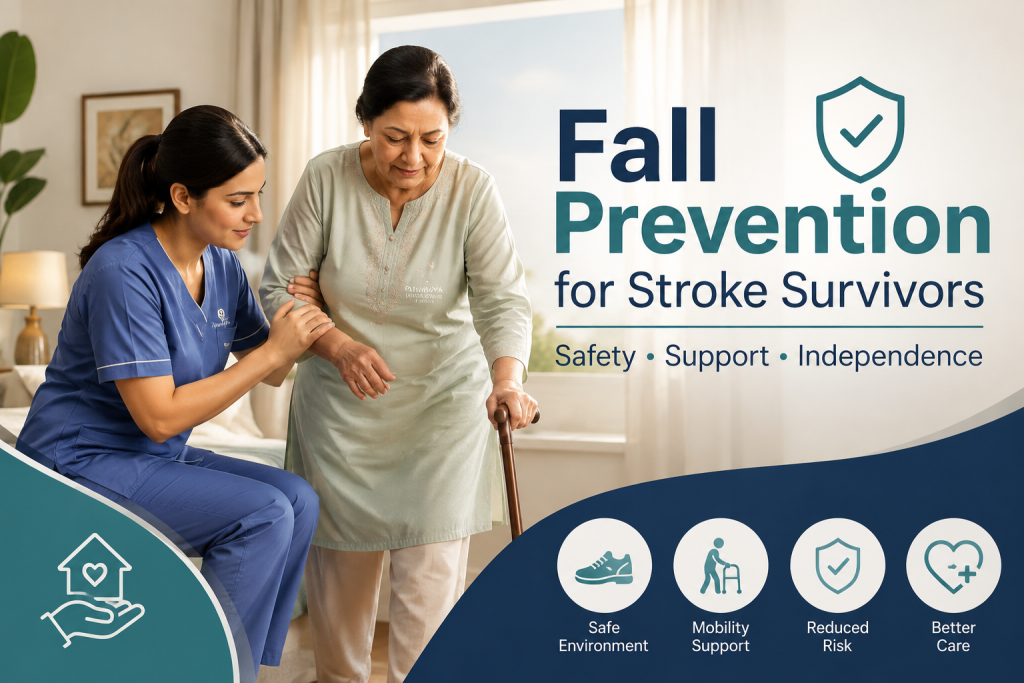
PATIENT CARE GUIDE Fall Prevention for Stroke Survivors A stroke changes how the body moves — balance shifts, one side weakens, and even a short walk to the bathroom can suddenly feel risky. Here’s how families in Lahore and beyond can lower fall risk and support safer recovery at home. Home Nursing Elderly Care Lahore 🏃 Physiotherapy Services Rebuild strength & balance 🏠 Nursing Services in Lahore Trained care at home 🛏️ Bedridden Patient Care Guide A complete family guide Falls are one of the most common setbacks during stroke recovery. A single fall can lead to fractures, hospital readmission, or a loss of confidence that slows progress for months. The good news? Many falls can be reduced with the right home setup, the right habits, and the right support. Why Stroke Survivors Are More Likely to Fall Stroke can affect the brain’s ability to control muscles, judge distances, or process what the eyes see. Knowing which after-effects apply to your loved one helps you focus on the right precautions instead of guessing. Weakness on one side (hemiparesis) Makes steps uneven and harder to control. Poor balance & coordination Especially noticeable when turning or standing up. Vision changes Blind spots or trouble judging depth and distance. Numbness in the feet Reduced feeling makes it harder to sense the floor. Fatigue Often shows up later in the day and affects focus. Medication side effects Dizziness or low blood pressure when standing up. Home Safety Tips That Actually Help Small changes around the house often prevent the most falls. 🧹 Clear the Walking Paths Remove loose rugs, stray cables, and clutter from hallways and rooms the patient uses often. 🚿 Make the Bathroom Safer Install grab bars near the toilet and inside the shower, and use non-slip mats where floors tend to get wet. 💡 Improve Lighting Use night lights in hallways and bathrooms, since many falls happen during nighttime trips to the toilet. 📍 Keep Essentials Within Reach Store frequently used items at waist height so the patient doesn’t need to stretch, bend, or climb. 🪑 Arrange Furniture for Support A stable chair or railing along the main walking route gives the patient something to hold onto. Daily Habits That Reduce Fall Risk Beyond the home setup, daily routines play a big role in staying safe. 1 Stand up slowly. Sudden standing can cause dizziness, especially if blood pressure drops. Encourage sitting on the edge of the bed for a moment before standing. 2 Use assistive devices consistently. A cane, walker, or quad stick should be used every time, not just on “hard” days. 3 Wear proper footwear. Non-slip, closed-back shoes work better than loose slippers. 4 Take mobility slowly, especially at night. Fatigue and low light both increase risk after dark. 5 Follow the physiotherapy plan. Regular, guided exercises rebuild strength and balance over time as part of the patient’s overall stroke recovery, and skipping sessions often slows progress. Help With Transfers Safely Moving between the bed, a chair, and the toilet is one of the moments when stroke survivors are most likely to fall, so it deserves its own attention. ✓Clear the area first. Remove anything the patient could trip over between the bed and the chair. ✓Lock the wheels. If a wheelchair is involved, always apply the brakes before the patient moves. ✓Position the chair close. A shorter distance means fewer unsupported steps. ✓Explain the movement first. Tell the patient what’s about to happen so they can help, rather than being moved suddenly. ✓Support the strong side, not the weak one. Pulling on a weak arm can cause pain or injury; let the patient lead with their stronger side instead. If transfers feel difficult or unsafe, a physiotherapist can show the family the correct technique for that specific patient. Common Mistakes Families Make Even caring families sometimes get this wrong. Rushing the patient to move faster than they’re ready for, out of good intentions Removing the walker or cane too early once the patient “seems fine” Leaving the patient alone during bathroom visits, one of the highest-risk moments Ignoring small stumbles, which are often early warning signs of a bigger fall risk Skipping non-slip footwear at home because “it’s just around the house” Recognizing these patterns early can prevent a setback before it happens. When to Seek Medical Help After a Fall Not every stumble is an emergency, but some signs need urgent attention. Seek urgent medical help if the patient: Loses consciousness, even briefly Has a severe or worsening headache Develops new weakness, numbness, or confusion Has speech that suddenly becomes worse Struggles to breathe Has severe pain, bruising, or a suspected fracture Contact the doctor if: Falls are happening repeatedly Dizziness is becoming frequent Balance has suddenly gotten worse There have been several near-falls New vision problems appear Falls in stroke survivors should never be treated as “just a stumble.” A quick check-up can catch problems early. How Professional Home Nursing Support Helps Watching for fall risk around the clock isn’t always possible for families juggling work and other responsibilities. 🩺 Trained nursing staff can help with supervised mobility, physiotherapy support, and safe transfers between bed, chair, and bathroom as part of a patient’s daily care routine, giving families peace of mind alongside the patient’s recovery. For families in Lahore, working with a home nursing service that understands stroke recovery, such as Shumaya Home Care & Patient Service, can make daily safety far more manageable, especially in the weeks right after a stroke when the patient is still relearning movement. Frequently Asked Questions How long does fall risk last after a stroke? It varies. Some patients regain steady balance within weeks, while others need ongoing support for months. Physiotherapy progress is the best guide. Is it safe to leave a stroke survivor alone at home? It depends on their mobility level. Many families start with supervised periods and gradually increase independence as balance improves, often with input from a physiotherapist. Do all stroke survivors need
Emotional changes after stroke

Patient Care Guide Emotional Changes After Stroke: What Families Should Know A stroke changes more than movement or speech. For many families, the hardest part of recovery isn’t the physical therapy — it’s watching a loved one’s mood and personality shift in ways no one warned them about. Stroke Recovery Home Nursing Elderly Care Lahore 🛏️ Bedridden Patient Care Complete family guide 💛 Palliative Care at Home Comfort & quality of life 🩺 Nursing Services in Lahore Trained care at home Why Emotional Changes Happen After a Stroke A stroke damages part of the brain, and the brain controls emotions just as much as it controls arms, legs, and speech. Depending on which area was affected, a patient may struggle to control how they feel or how they react. There’s also the emotional weight of the stroke itself. Losing the ability to walk, talk, or care for oneself is a huge adjustment. It’s normal for a patient to grieve the life they had before, even while they’re grateful to be alive. Common Emotional Changes to Expect Every stroke survivor is different, but families often notice a mix of these changes: ✓Sudden mood swings — laughing one minute, crying the next, without an obvious reason ✓Irritability or anger over small, everyday things ✓Anxiety, especially around falling, being left alone, or trying new tasks ✓Depression, including low energy, loss of interest, or hopeless talk ✓Emotional flatness, where the patient seems withdrawn or less expressive than before ✓Uncontrollable crying or laughing that doesn’t match how the person actually feels inside This last one has a medical name — pseudobulbar affect — and it can be alarming for families who don’t know it’s a recognized effect of stroke, not a sign the patient is “losing it.” Is This Depression, or Something Else? Families often ask whether these changes are just sadness about the stroke, or something more serious. Post-stroke depression is common and real, and it’s different from general low mood. It can affect sleep, appetite, motivation, and participation in rehabilitation, so it should not be ignored. The safest step is to mention any lasting sadness, hopelessness, or loss of interest to the patient’s doctor. Emotional changes after stroke are treatable — a doctor can tell whether therapy, medication, or both would help. How Families Can Respond You don’t need to have the perfect words. What helps most is consistency and patience. Stay calm during outbursts Reacting with frustration usually makes things worse. A quiet, steady voice helps the patient settle faster. Name the change without blame Something like, “I know this is hard right now,” works better than asking, “Why are you so upset?” Give the patient time to respond Communication can become harder after a stroke. Avoid finishing sentences for them or rushing their answers — giving them time reduces frustration and helps them feel involved. Keep routines predictable A steady daily schedule for meals, therapy, and rest gives an unsettled brain something familiar to hold onto. Watch for triggers Tiredness, pain, or too much noise and activity often make emotional swings worse. Reducing these where possible can prevent a hard moment before it starts. Celebrate small wins Recovery can feel painfully slow to a stroke survivor. Recognizing small progress, like holding a spoon steadier than last week, can lift mood in a real way. When to Call a Doctor Reach out to the patient’s doctor if you notice: Talk of hopelessness or not wanting to be here anymore Emotional changes getting worse instead of better over several weeks Complete withdrawal from family, food, or activities they used to enjoy Anger that leads to harming themselves or others Sudden, severe changes in behavior or confusion — this can signal a medical issue, not just an emotional one These signs deserve a medical conversation, not a wait-and-see approach. Where Home Nursing Support Fits In Managing physical recovery and emotional ups and downs at the same time is a lot for one family to carry alone. For families managing stroke recovery at home in Lahore, trained home nursing support can make daily care easier. A nurse who visits regularly can: ✓Notice changes in mood and behavior early ✓Support daily routines and personal care ✓Assist with medication schedules as directed by the doctor ✓Communicate any concerns to the family promptly ✓Give family caregivers time to rest This kind of support doesn’t replace medical or psychological treatment — it works alongside it, making daily life more manageable while the patient’s doctor handles the emotional and medical side of recovery. Regular physiotherapy support can also play a role in this stage of recovery, helping the patient rebuild confidence alongside their emotional healing. FAQs Do emotional changes after stroke go away with time? For many patients, mood stabilizes as the brain heals and daily routines return. Some emotional effects can last longer, which is why ongoing check-ins with a doctor matter. Can medication help with post-stroke mood swings? Yes. Doctors sometimes prescribe medication for depression or pseudobulbar affect after stroke, alongside therapy and family support. Why does a stroke survivor suddenly cry or laugh? This is often pseudobulbar affect — a common effect of stroke where emotional expression doesn’t match how the person actually feels inside. It’s a recognized medical condition, not a sign of instability, and a doctor can advise on ways to manage it. Is it normal for a stroke survivor to seem like a different person? Personality shifts after stroke are common and usually connected to the specific part of the brain affected. It doesn’t mean the person is gone — it means their brain needs time and support to heal. If your family is navigating stroke recovery at home, professional home nursing and patient care support can ease the load — for both the patient and the people caring for them. Explore More 🧑⚕️ Medical Attendant Services Day & night support at home 🏃 Physiotherapy Services Rehab support at home 🏠 About Shumaya Home Care Who we are & how we help Need
Preventing Bed Sores After Stroke
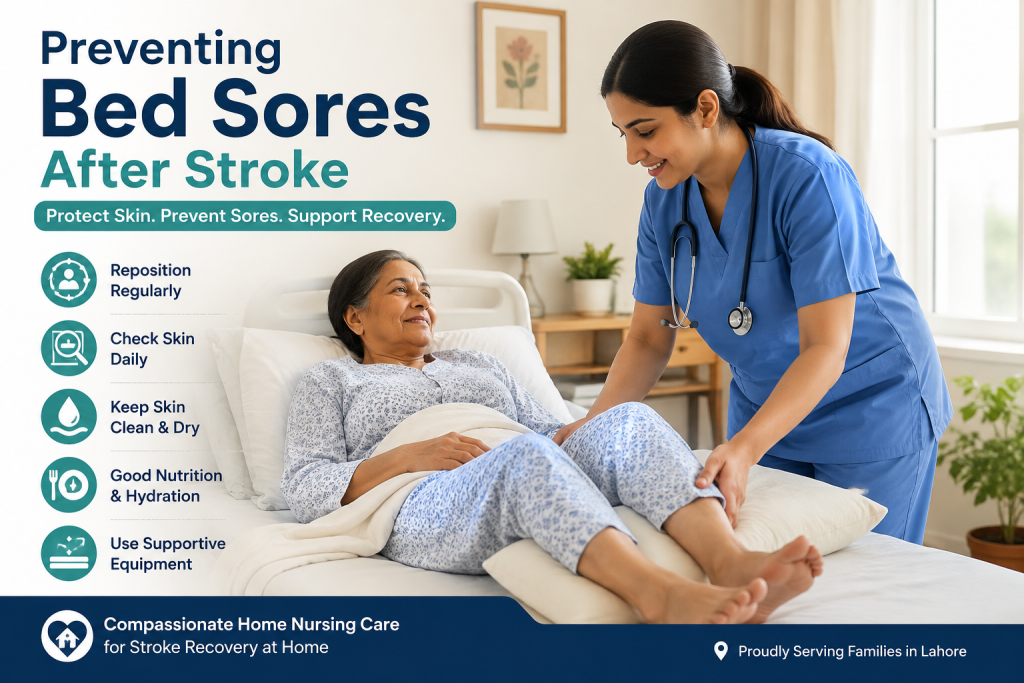
PATIENT CARE GUIDE Preventing Bed Sores After Stroke: A Family Guide for Home Care When a loved one comes home after a stroke, families usually focus on the big things first — movement, speech, daily routines. But there’s a quieter risk that often gets missed: bed sores. With the right home nursing care and a few daily habits, most are preventable. Home Nursing Elderly Care Stroke Recovery Lahore 🛏️ Bedridden Patient Care Guide Full family guide 🩺 Nursing Services in Lahore Book a home nurse 🧑⚕️ Physiotherapy Services Support mobility recovery Understanding the Risk Why Stroke Patients Are at Higher Risk A stroke can weaken or paralyze one side of the body, making it hard for a patient to shift their own weight. When someone stays in the same position for too long, blood flow to that area drops, and the skin starts to break down. A few other stroke-related factors raise the risk: Reduced sensation Patients may not feel the discomfort that would normally make them shift position. Poor nutrition Recovery can affect appetite, and thin, undernourished skin breaks down faster. Incontinence Moisture on the skin makes it more fragile. Limited communication Some stroke patients can’t easily tell caregivers they’re uncomfortable. This is why bedridden patient care after a stroke needs close, hands-on attention, not just occasional checking. Where to Look Where Bed Sores Usually Show Up Bed sores tend to form over bony areas where there’s less natural padding. Watch closely for: Heels and ankles Hips and lower back (tailbone) Shoulder blades Elbows The back of the head, if the patient lies flat often If your loved one favors one side of the body due to weakness from the stroke, that side needs extra attention. Daily Checks Early Warning Signs to Check Daily Catching a bed sore early makes all the difference. During daily care, look for: Redness that doesn’t fade after removing pressure for 10–15 minutes Warm or firm patches of skin compared to the surrounding area Skin that looks shiny or feels different in texture Small blisters or open areas, which mean the sore has already progressed A simple daily skin check — done during bathing or repositioning — catches most problems before they become serious. The Most Important Habit Repositioning: The Most Important Habit The single best way to prevent bed sores is regular repositioning. For stroke patients who can’t move independently, this means: Changing position at least every 2 hours if bedbound Shifting weight every 15–20 minutes for those in a wheelchair Using pillows or foam wedges to support the weak side and relieve pressure on bony areas Avoiding dragging the patient across sheets, which can cause friction injuries — lift gently instead Keeping a simple repositioning schedule on the wall or phone helps caregivers stay consistent, especially during the first few weeks home. Daily Habits Skin Care and Hygiene Tips Healthy skin resists pressure damage better. A few daily habits go a long way: Keep skin clean and dry, especially after any incontinence episodes Use a mild, fragrance-free moisturizer to prevent dryness and cracking Avoid harsh scrubbing — pat skin dry instead of rubbing Check bedding regularly for wrinkles or dampness, both of which increase friction Recovery Support Nutrition and Hydration Matter Too Skin heals and stays strong when the body gets enough protein, vitamins, and fluids. After a stroke, appetite can be low, so families often need to be intentional about: Offering protein-rich foods like eggs, lentils, chicken, or dairy Encouraging small, frequent meals if large portions feel overwhelming Keeping the patient hydrated throughout the day, unless a doctor has advised fluid limits Speaking with a doctor about supplements if the patient isn’t eating well Good nutrition supports both stroke recovery and skin health at the same time. Helpful Tools Helpful Equipment for Bed Sore Prevention A few tools make prevention easier at home: 🛌 Pressure-relieving mattresses or foam overlays that reduce constant pressure on one spot 🦶 Heel protectors or foam wedges to keep heels off the mattress entirely 🪑 Soft cushions for wheelchair use 💧 Moisture-wicking bed sheets for patients dealing with incontinence Home nursing services can help families choose the right equipment based on the patient’s specific mobility level and risk factors. Know the Line When to Call a Doctor Some situations need medical attention right away, not just home care. ⚠️ Contact a doctor if you notice: An open sore or wound that isn’t healing Signs of infection, such as pus, odor, or increasing redness Fever along with a skin wound A sore that keeps returning in the same spot despite repositioning Left untreated, bed sores can lead to serious infections, so early medical involvement matters. Extra Support How Professional Home Nursing Care Helps Caring for a stroke patient at home is demanding, especially in the early weeks. A trained home nurse can: Perform regular skin checks and document any changes Manage a consistent repositioning schedule Assist with safe, gentle movement to avoid friction injuries Coordinate with doctors if a sore does develop For families in Lahore managing stroke recovery at home, professional patient care services can take pressure off the family while keeping the patient safer and more comfortable. FAQs Frequently Asked Questions How often should a stroke patient be repositioned? Generally every 2 hours in bed, and every 15–20 minutes if seated in a wheelchair, though a doctor or nurse can adjust this based on the patient’s condition. Can bed sores heal on their own? Early-stage redness often improves once pressure is relieved. Once the skin breaks open, it usually needs proper wound care and medical guidance to heal safely. Are bed sores always preventable? Not always, especially in patients with very limited mobility, but consistent repositioning, skin checks, and good nutrition prevent the vast majority of cases. Final Thoughts Consistency Is the Best Protection Preventing bed sores after a stroke comes down to consistency — daily skin checks, regular repositioning, good nutrition, and the right equipment. These small habits protect a patient’s comfort and
Physiotherapy After Stroke at Home:
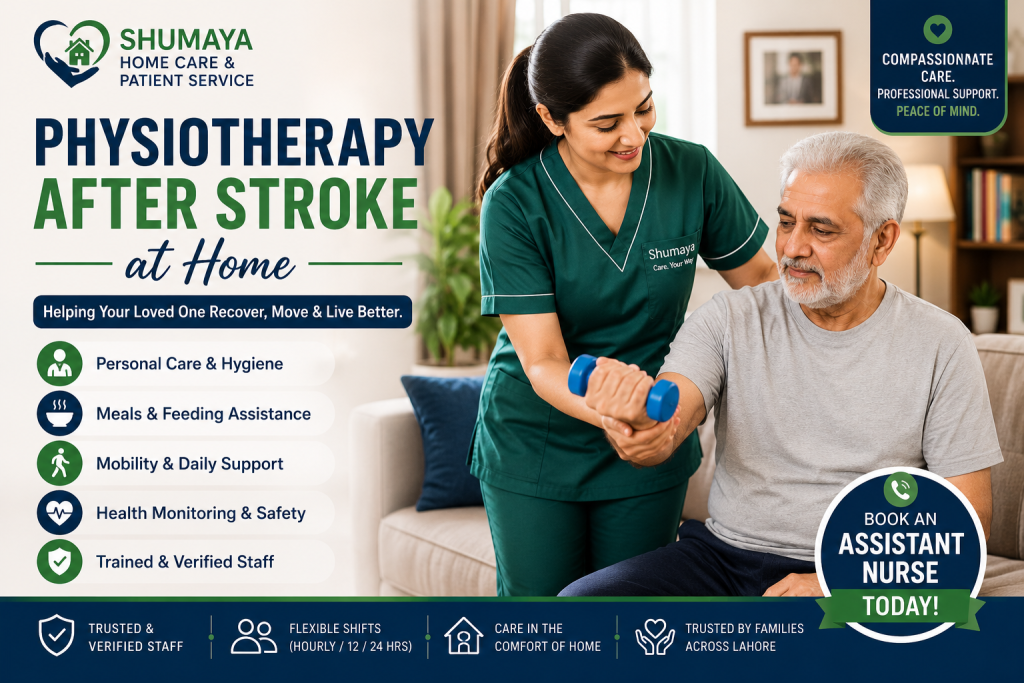
PATIENT CARE GUIDE Physiotherapy After Stroke at Home: A Complete Recovery Guide for Family Caregivers A stroke can change everyday life in an instant. Here’s how families in Lahore can support safe, guided rehabilitation at home — from first exercises to knowing when to call for help. Stroke Rehabilitation Physiotherapy Home Nursing Lahore 🛏️ Bedridden Patient Care A complete family care guide 🤝 Palliative Care at Home Comfort, support & quality of life 💉 Diabetic Patient Care A guide for family caregivers The basics What Is Physiotherapy After a Stroke? Physiotherapy after a stroke is a form of rehabilitation that helps a patient improve movement and physical function. A stroke can affect one side of the body, making an arm or leg weak. Some patients also have problems with balance, coordination, walking, or muscle stiffness. A physiotherapist assesses the patient’s condition and develops exercises based on their specific needs. Treatment may focus on: Improving muscle strength Maintaining joint movement Improving balance and coordination Practicing safe standing and walking Improving the use of an affected arm or leg Training everyday movements Reducing the risk of falls Building confidence with physical activity Recovery is different for every stroke survivor. The exercises that are safe and useful for one patient may not be suitable for another. Repeated, guided practice can help the patient relearn movements and become more capable of performing everyday activities. Why it helps Why Home-Based Physiotherapy Can Help Stroke Patients Home-based physiotherapy allows rehabilitation to take place in the environment where the patient spends most of their time. This can be especially helpful when travelling to a clinic is difficult because of weakness, mobility problems, transportation issues, or the need for family assistance. 1 Patients Can Practice Real-Life Movements A physiotherapist can work on movements the patient actually needs at home — sitting up safely in bed, standing from a chair, moving between bed and chair, walking to the bathroom, moving between rooms, and using stairs when appropriate. This makes therapy closely connected to everyday life. 2 The Patient Stays in a Familiar Environment Some stroke survivors feel anxious or tired when travelling for treatment. Receiving physiotherapy at home removes some of that difficulty and allows the patient to work in a familiar space. 3 Family Caregivers Can Learn How to Help Home sessions give caregivers a chance to understand how to support the patient safely. A physiotherapist can show family members how to assist with movements, positioning, transfers, and walking — without taking over tasks the patient can still do independently. 4 It Can Make Regular Therapy Easier Stroke rehabilitation often involves repeated practice. Having therapy at home may make it easier for some families to maintain a regular routine. For families arranging physiotherapy at home in Lahore, the patient’s mobility, safety, medical condition, and rehabilitation needs should all be considered when choosing the right type of support. Timing When Can Physiotherapy Start After a Stroke? The timing of physiotherapy depends on the patient’s medical condition and the advice of their healthcare team. Rehabilitation may begin during the hospital stay once the patient is medically stable. After discharge, therapy may continue at a rehabilitation center or at home. There is no single starting point or recovery schedule for every stroke survivor. The severity and location of the stroke, the patient’s strength and balance, other health conditions, and their response to treatment can all affect the rehabilitation plan. Family members should follow the recommendations of the patient’s doctor and physiotherapist rather than starting difficult exercises on their own. Exercises Common Physiotherapy Exercises After Stroke Stroke exercises should be selected according to the patient’s abilities. A physiotherapist should demonstrate the appropriate exercises and explain how often they should be performed. 1 Range-of-Motion Exercises Gentle movements can help maintain joint flexibility and reduce stiffness. Depending on the patient’s condition, therapy may include carefully moving the arm, wrist, fingers, leg, or ankle through a comfortable range of movement. If the patient cannot move a limb independently, a caregiver may sometimes be taught how to assist — only as instructed by the physiotherapist. 2 Strengthening Exercises Stroke can cause weakness in an arm, leg, or one side of the body. A physiotherapist may introduce simple strengthening exercises when appropriate, involving controlled body movements, resistance, or weight-bearing activities. More exercise is not always better, especially when the patient becomes tired or loses control of the movement. 3 Balance Training Balance problems can make standing and walking unsafe after a stroke. Physiotherapy may include practicing: Sitting with good control Standing safely Shifting weight from one side to another Maintaining a stable position Moving between sitting and standing 4 Gait and Walking Training Some stroke survivors need to relearn how to walk. Walking therapy may involve practicing proper foot placement, weight shifting, standing control, and safe steps. A patient may need a walking aid such as a cane or walker — the appropriate device and level of support should be decided by a qualified professional. Family members should not pull or force a patient to walk if they are unable to maintain safe control. 5 Hand and Finger Exercises A stroke can affect grip, finger movement, and the ability to use the affected hand. A physiotherapist may recommend repeated hand and finger movements to work on control and coordination — skills that can later connect to daily activities like holding a cup, using a spoon, buttoning clothing, or picking up light objects when safe. Caregiver’s role How Family Caregivers Can Support Physiotherapy at Home Family support can make a big difference, but caregivers should think of themselves as supporters rather than replacing the physiotherapist. Here are practical ways to help. Create a simple routine — follow the exercise schedule provided by the physiotherapist, without adding extra exercises just because the patient appears to be improving. Keep the exercise area safe — remove loose rugs, clutter and wires, ensure enough space, and use any walker, cane, or grab rail as instructed. Encourage independence — if the patient
Best diet for stroke patients ·

PATIENT CARE GUIDE Best Diet for Stroke Patients: A Practical Family Guide Watching a loved one recover from a stroke is not easy. Food becomes one of the biggest daily decisions — this guide breaks down what to eat, what to avoid, and how to build safe, doctor-friendly meals at home. Home Nursing Elderly Care Lahore 🩺 Nursing Services In-home care, Lahore 🧑⚕️ Physiotherapy Recovery support at home 📋 Diabetic Patient Care Related guide 🛏️ Bedridden Patient Care Complete family guide One day everything feels normal, and the next, your family is learning new routines, new medicines, and new ways to care for someone you love. These are real worries for families managing patient care at home in Lahore. The good news is that a stroke patient’s diet does not need to be complicated. With the right daily choices, meals can support brain healing, protect the heart, and lower the risk of a second stroke. This guide breaks down the best diet for stroke patients in simple, practical terms. Why Diet Matters After a Stroke A stroke happens when blood flow to the brain is blocked or reduced. Because of this, diet plays a direct role in the two biggest stroke risk factors: high blood pressure and high cholesterol. How the Right Foods Help Keep blood pressure steady Lower bad cholesterol Support healthy blood sugar levels Reduce swelling and inflammation Give the body energy for recovery and therapy Food alone will not replace medicine or therapy, but it does work alongside them. Families providing home nursing services in Lahore often see faster, smoother recovery when a proper diet plan is followed consistently. Foods That Support Stroke Recovery 1 Fruits and Vegetables Rich in fiber, potassium, and antioxidants — these nutrients help control blood pressure and protect blood vessels. Aim for at least five servings a day, spread across meals. Leafy greens like spinach and mustard greens (saag) Bananas and oranges Carrots and pumpkin Berries, when available 2 Whole Grains Whole grains release energy slowly and help manage cholesterol. Replace white rice and refined flour (maida) with better options — a small swap that makes a real difference over weeks and months. Brown rice Whole wheat roti Oats Barley (jau) 3 Healthy Fats Not all fats are bad — stroke patients need fats that support the heart and brain. Deep-fried foods, butter, and ghee should be avoided in large amounts, since these raise cholesterol. Olive oil or mustard oil in moderate amounts Nuts like almonds and walnuts Fatty fish such as salmon, or affordable local options like rohu 4 Lean Protein Protein helps rebuild muscle strength, which matters a lot for patients working through physiotherapy after a stroke. Skinless chicken Lentils (daal) and beans Eggs, in moderation Low-fat dairy like yogurt 5 Low-Sodium Choices Too much salt raises blood pressure, which in turn increases stroke risk. This is one of the most important changes a family can make. Cook with less salt and use herbs or lemon for flavor instead Avoid packaged snacks, pickles, and processed meats Read labels on sauces and canned foods ⚠️ Foods to Avoid or Limit Some foods work against stroke recovery and should be kept to a minimum. That said, cutting these out completely is not always realistic — reducing them gradually, meal by meal, works better for most families. Fried and oily foods Sugary drinks and sweets Processed and packaged snacks Excess red meat High-sodium foods like namkeen, pickles, and canned soups Alcohol Handling Swallowing Difficulties Some stroke patients develop difficulty swallowing, known as dysphagia. Because of this, meal texture matters just as much as meal content, since it raises the risk of choking. Helpful Adjustments Soft, mashed, or pureed foods Thickened liquids if recommended by a doctor Smaller bites and slower eating pace Sitting fully upright while eating If swallowing problems appear, a doctor or speech therapist should be consulted before changing food texture on your own. Trained caregivers providing post-surgical care and stroke recovery support at home are often familiar with safe feeding techniques for these situations. Sample Daily Meal Guide Breakfast Oats with banana and a small handful of nuts Mid-morning A piece of fruit or plain yogurt Lunch Brown rice, daal, and a vegetable side dish Evening A cup of green tea with a few almonds Dinner Grilled chicken or fish with steamed vegetables and one roti Portion sizes, of course, should match the patient’s activity level and any specific instructions from their doctor or dietitian. Common Mistakes Families Make Assuming “home-cooked” always means healthy, even when it is heavy in oil and salt Skipping meals because the patient has low appetite Not tracking fluid intake, which matters for blood pressure and kidney health Making sudden, drastic diet changes instead of gradual ones 🚩 When to Call a Doctor Sudden difficulty swallowing or frequent coughing while eating Unexplained weight loss Signs of dehydration New confusion, weakness, or slurred speech, which could signal another stroke Frequently Asked Questions Can a stroke patient eat rice and roti? Yes, in moderation. Whole wheat roti and brown rice, specifically, are better choices than refined white options. Is fruit juice a good substitute for whole fruit? Whole fruit is generally better because it contains fiber, which juice lacks. Additionally, juice can spike blood sugar quickly. How much water should a stroke patient drink? This, ultimately, depends on the patient’s kidney function and doctor’s advice. Therefore, always confirm fluid limits with a physician. Can diet alone prevent a second stroke? No. Diet supports recovery and lowers risk, but it works alongside medication, physiotherapy, and regular checkups. Final Thoughts A good diet will not undo a stroke, but it can, nonetheless, meaningfully support recovery and reduce the risk of it happening again. Overall, simple changes, made consistently, matter more than perfection. Families managing recovery at home, however, do not have to do this alone. Professional home nursing services, elderly care, and patient care services in Lahore can help build and follow a safe, doctor-approved diet and recovery
Daily care routine stroke patients
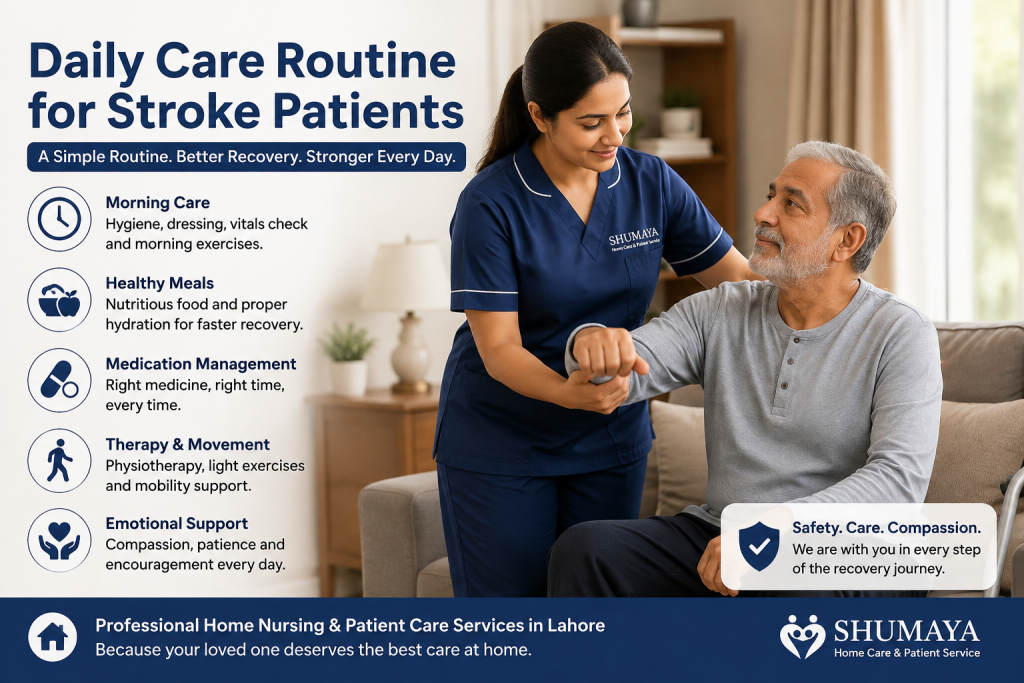
Patient Care Guide A daily care routine for stroke patients the whole family can follow Stroke recovery gets easier when there’s a steady rhythm to the day. This guide walks through what a practical daily routine can look like at home — from morning hygiene to safe sleep — plus the small habits that add up to real progress. Home Nursing Elderly Care Lahore Related Care Guides 🛏️ Bedridden Patient Care A complete family guide 💉 Diabetic Patient Care Daily management at home 🤍 Palliative Care at Home Comfort, support & quality of life Quick Reference Daily routine at a glance Use this as a quick reference, then keep reading for the details behind each part of the day. Time Daily Task Morning Hygiene, dressing, medication Breakfast Healthy meal and hydration Midday Therapy and movement Afternoon Rest and light activity Evening Medication, dinner, relaxation Night Safe sleeping position Why It Matters Why a daily routine matters after stroke Stroke recovery is not just about physical healing. In addition, it’s about rebuilding confidence, strength, and independence, one day at a time. A consistent routine gives the brain and body something predictable to work with. As a result, it also becomes easier for family caregivers to notice small changes early, and because of this, early attention to new symptoms can prevent bigger problems later. Morning Morning care routine Mornings often set the tone for the rest of the day, so keep this part calm and unhurried. Gentle waking and positioning: Help the patient sit up slowly to avoid dizziness. Personal hygiene: Assist with brushing teeth, washing the face, and grooming. At the same time, encourage the patient to do what they can on their own, since it helps rebuild motor skills. Dressing: Choose easy-to-wear clothing, such as front-fastening shirts and slip-on shoes, to support independence without frustration. Checking vitals: Many families track blood pressure and pulse each morning, especially if a doctor has asked for this. If one side of the body is weaker, always support that side first when helping the patient move or dress. Nutrition Nutrition and meal times Eating well supports recovery and, in turn, helps prevent complications like weight loss or dehydration. Offer small, frequent meals instead of large ones if the patient tires easily. Watch for swallowing difficulty, since this is a common stroke effect. For example, soft foods, thickened liquids, and slow, seated eating can lower the risk of choking. Include fruits, vegetables, whole grains, and lean protein to support heart and brain health. Keep a water bottle nearby, because stroke patients sometimes forget to drink enough during the day. If swallowing problems appear at any meal, such as coughing, gagging, or a wet-sounding voice, stop the meal right away and speak with a doctor. Medication Medication management Missed or mistimed medication is, unfortunately, one of the more common problems in stroke recovery at home. Use a labeled pill organizer for each day of the week. Set phone alarms or reminders for medication times. Keep a simple written log, so any caregiver in the house knows what has already been given. Never adjust a dose without the doctor’s approval, even if the patient seems to be feeling better. Overall, good medication management is one of the areas where home nursing services in Lahore can take real pressure off a family, especially when several medications are involved. Movement Physical therapy and movement Movement, done safely, is one of the biggest drivers of stroke recovery. First, follow the exact exercises given by the physiotherapist. Don’t skip or add movements without guidance. Next, practice sitting, standing, and short walks as advised, using a walker or cane if recommended. Also, encourage light stretching for the affected arm or leg to prevent stiffness. Finally, take breaks between exercises, since progress in stroke recovery is usually slow and steady rather than fast. Families who feel unsure about handling exercises safely often, therefore, bring in support through home nurse services, particularly for patients who are still weak or unsteady on their feet. Safety Safety tips at home Remove loose rugs and clear walking paths. Add grab bars in the bathroom and a non-slip mat in the shower. Keep frequently used items within easy reach, so the patient doesn’t need to stretch or bend awkwardly. Make sure lighting is bright, especially on stairs and in hallways. If the patient uses a wheelchair or walker, check that doorways and furniture spacing allow easy movement. Sleep A note on sleep Regular sleep is part of a good daily routine, not separate from it. Therefore, try to keep a consistent bedtime and wake time, even on slower recovery days. A calm, dimly lit room, a comfortable and safe sleeping position, and a short wind-down period without screens can, together, help the patient settle more easily. However, if sleep is unusually disturbed or the patient seems excessively drowsy during the day, mention it to the doctor at the next visit. Emotional Wellbeing Emotional support tips Stroke recovery affects mood as much as it affects the body. In fact, it’s common for patients to feel frustrated, sad, or withdrawn. Talk to the patient like an adult, not a child, even if their speech is affected. Celebrate small wins, such as a few extra steps, a clearer word, or a better appetite. Encourage light social contact with family and friends instead of isolation. Watch for signs of ongoing low mood or hopelessness, and if it doesn’t improve, mention this to the doctor. Emergency Warning signs to watch for Some symptoms need medical attention right away, even during recovery. Call a doctor or emergency service immediately if you notice: Sudden new weakness or numbness, especially on one side Slurred speech or confusion that appears suddenly Severe headache with no clear cause Trouble breathing or chest pain A fall that leads to a head injury These signs can point to another stroke or a new medical problem. Therefore, it’s better to check early than to wait and see. Non-Emergency When to
Stroke Recovery Timeline Explained
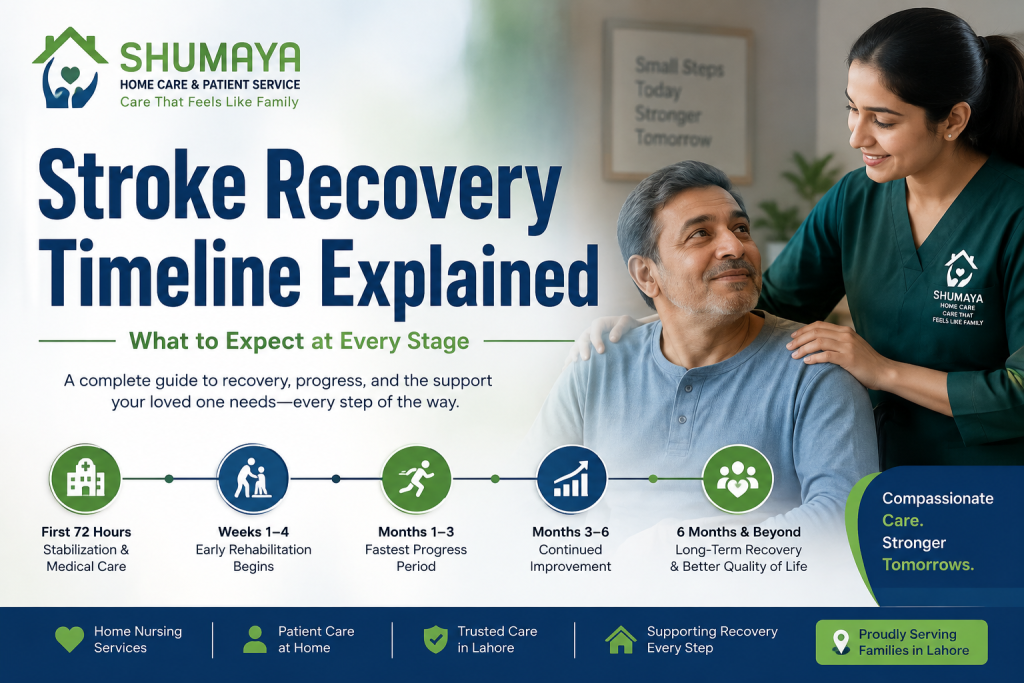
PATIENT CARE GUIDE Stroke Recovery Timeline Explained When someone in your family has a stroke, the first question most people ask is simple: “How long until they get better?” There isn’t one answer that fits every patient, but understanding the general stroke recovery timeline can help you plan, stay patient, and know what to expect at each stage. Stroke Recovery Home Nursing Lahore This guide walks through what typically happens in the days, weeks, and months after a stroke, so families in Lahore and beyond can support their loved one with confidence. 🛏️ Bedridden Patient Care Guide Preventing complications during recovery 💙 Palliative Care at Home A complete family guide to comfort Quick Summary Hospital care begins immediately after a stroke Therapy often starts within the first few days The biggest gains usually happen in the first three months Recovery can continue for months or even years Consistent family support makes a real difference